James M. Buchanan Quotes
People share a universal behavioural trait: if there are profits to be made, the effort to get that money will attract investment. This is true in the private sector, the market sector, as well as the public sector.
Buchanan, James M. "Interview with James M. Buchanan." Frontier Centre for Public Policy, 2002.


This is a noteworthy quotation because it illustrates—to a slightly exaggerated degree—a major difference between the public and private sectors. However, Conrad fails to point out that when government does try and establish several competitive programs and approaches, conservatives like him are the first say that the government officials do not know what they are doing and then they object to the “duplication” and “waste.” Further, usually, when a government entity does experiment as the private sector competitive system does, it is chastised by liberals and conservatives alike for having had attempts that failed or did not succeed well. Experimenting requires a cultural tolerance for failure or imperfection. Only very courageous executive politicians like President Franklin Delano Roosevelt have been able to initiate many programs aiming at the same objective with the society keeping the best—like Social Security and rejecting the worst like the National Recovery Administration. See {631419} for his view.


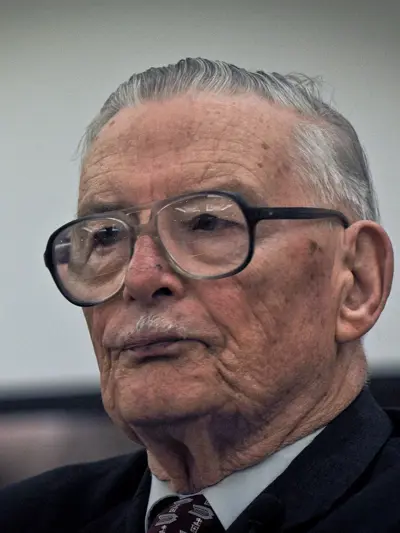
James McGill Buchanan Jr. was an American economist known for his work on public choice theory (included in his most famous work, co-authored with Gordon Tullock, The Calculus of Consent, 1962), for which he received the Nobel Memorial Prize in Economic Sciences in 1986. Buchanan's work initiated research on how politicians' and bureaucrats' self-interest, utility maximization, and other non-wealth-maximizing considerations affect their decision-making. He was a member of the Board of Advisors of The Independent Institute as well as of the Institute of Economic Affairs, a member (and for a time president) of the Mont Pelerin Society, a Distinguished Senior Fellow of the Cato Institute, and professor at George Mason University.
