Mark Twain Quotes
… patriotism is usually the refuge of the scoundrel. He is the man who talks the loudest.
Samuel Langhorne Clemens, 1835-1910
Mark Twain, Writer, Founder, Anti-Imperialist League, Speech, May 14,1908
Sourced by: Eigen's Political and Historical Quotations


The hypocricy of this slogan is almost incredible. Most of the actions of the KKK over the years have violated the spirit and the laws of America. They are opposed to many of the Bill of Rights. There was a time, before the 1970s, where members literally got away with murder in the South. When Americas laws were enforced and KKK members who broke the law were jailed and sued for monetary damages, the Klan has a very tiny membership and is constantly under survelience.


“Fain” in this context means “forced by circumstances.” Emerson was suspicious of the facts behind any issue about which all are being extremely patriotic.


He asked for a lawyer, and was laughed at. He was jailed for 30 days and he never forgot it, even when he became the most highly paid writer in American history.


The phrase “Loyalty to the government is our national creed” was advocated by almost all politicians after the Civil War. There were a few communists of the left and libertarians on the right who would disagree but every president tool this position until the administration of Ronald Reagan who then many politicians claimed that the government was a problem and even an enemy of the people. Loyalty was in their view, not to be given to the Government, but to the ideas and ideals of America (as they saw them.) Since then many politicians would talk of “loyalty to America” but not use the McKinley phrase “loyalty to the government.”
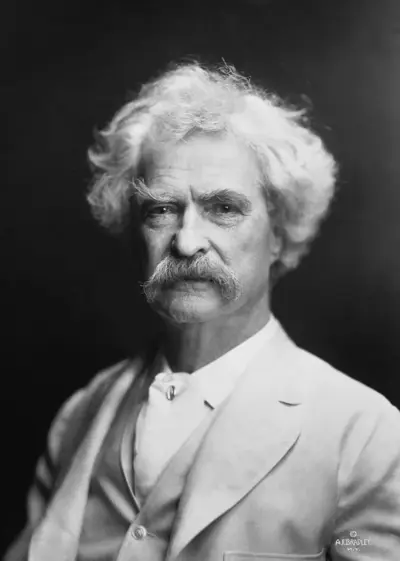
Samuel Langhorne Clemens, known by his pen name Mark Twain, was an American writer, humorist, entrepreneur, publisher, and lecturer. He was lauded as the "greatest humorist the United States has produced," and William Faulkner called him "the father of American literature". His novels include The Adventures of Tom Sawyer (1876) and its sequel, the Adventures of Huckleberry Finn (1884), the latter often called "The Great American Novel".
