Pablo Picasso Quotes
Painting is not made to decorate apartments. It's an offensive and defensive weapon against the enemy. (about Guernica).
Téry, Simone. "Picasso n'est pas officier dans l'armée française, mais..." Les Lettres Françaises, 24 Mar. 1945, p. 6.


One difficulty of diplomacy with many Islamic leaders is that the culture produces very aggressive rhetoric and very aggressive actions like Islamic terrorism. This quotation is often cited to demonstrate that it is the Iranians that had decided that America is it’s enemy; that America is to be humbled; and that their weapons development are targeted at America. This along with the most frequent Iranian slogan, “Death to America,” for many argues for preemptive military action or maintenance of a high state of readiness. Given statements like this from the leading soldier of the theocracy, there is little doubt that Iranian nuclear weapons would be a great danger to America. Therefore when Iran complains that America did not object to the fact that other nations have the nuclear bomb, they do not take their own rhetoric into account. No other nation with possible nuclear capability has made America its major military adversity and claims as an objective to humble the United States.

There was a Sedition law which made it a Federal felony to encourage anyone not to join or support the military during the First World War. The Socialist Politician and Candidate for President, Eugene Debbs and others, were jailed for less seditious statements. Helen Keller was a remarkable woman who was blind and deaf, and yet she became a great orator and social reformer. The administration died not relish the reaction if they put this popular, blind, deaf woman in jail so she was never charged. The law of course was unconstitutional, but it took years to reach that determination. Until then, the Sedition Act was one of the worst examples of infringement in American history since the original Alien and Sedition Acts of John Adams.


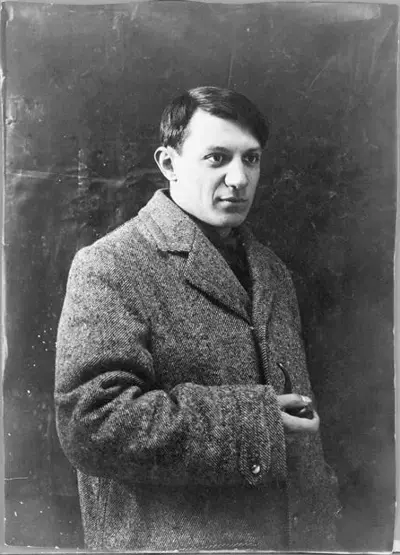
Pablo Ruiz Picasso was a Spanish painter, sculptor, printmaker, ceramicist and theatre designer who spent most of his adult life in France. Regarded as one of the most influential artists of the 20th century, he is known for co-founding the Cubist movement, the invention of constructed sculpture, the co-invention of collage, and for the wide variety of styles that he helped develop and explore. Among his most famous works are the proto-Cubist Les Demoiselles d'Avignon (1907), and Guernica (1937), a dramatic portrayal of the bombing of Guernica by German and Italian air forces during the Spanish Civil War.
