Ludwig Quidde Quotes
Pacifist propaganda and the resolutions of the parliamentarians encouraged such treaties, and toward the end of the nineteenth century their number had increased considerably.
Quidde, Ludwig. "Security and Disarmament." 12 Dec. 1927, Oslo, Norway. Nobel Lectures, Peace 1926-1950, edited by Frederick W. Haberman, Elsevier Publishing Company, 1972.


In the play the two characters are a Russian and American disarmament negotiator:

Theodore Roosevelt was the Presidential nominee. Johnson was a leader of some members of Congress some of whom were extreme isolationists and some of whom were Nazi sympathizers and Hitler admirers. When the Japanese attacked Pearl Harbor later that year, Germany, fulfilling its treaty with Japan, declared war on America, Johnson’s group no longer mattered. Before WWII most Republicans were opposed to Defense Spending and accused the Democrats of being war hawks. After WWII, they flip flopped and became more hawkish than the Democrats who they accused of being soft on defense for years thereafter. See {631380} for President Roosevelt’s different view.


This is a particularly important quotation about the Civil War. General Sherman is usually credited with the idea of rapid, extensive warfare causing surrender and an end to war. (To some today even he is blamed for this doctrine.) However, the basis of this was in the code of the United States Army that was issued to Sherman and all other officers and approved by the General Staff and President Lincoln. Sherman, was probably the first military officer in modern history to actually implement such a policy but he did not originate it.


Lincoln was depressed when the Union had over 30,000 casualties in a two-week time.
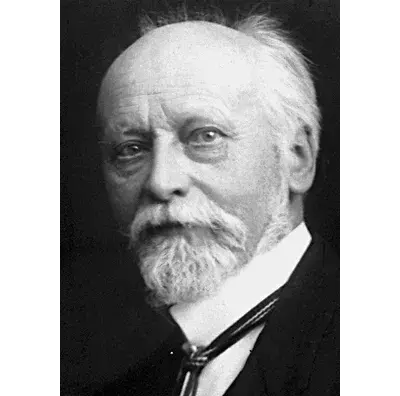
Born into a wealthy bourgeois merchant family, Quidde grew up in Bremen, read history and also got involved in the activities of the German Peace Society (Deutsche Friedensgesellschaft). In his younger years he had already opposed Bismarck's policies. In 1881 he received his PhD at the University of Göttingen. In 1894 Quidde published a 17-page pamphlet entitled Caligula. Eine Studie über römischen Caesarenwahnsinn (Caligula: A Study of Imperial Insanity). Containing 79 footnotes, the short essay is exclusively about the Roman Empire of the 1st century AD. However, Quidde drew an implicit parallel between the Roman Emperor Caligula and Wilhelm II, de facto accusing both rulers of megalomania. The author had insisted on publishing his pamphlet under his real name, which effectively ended his academic career as a historian when, in some periodical, a short review explained the parallels which otherwise might have gone unnoticed. After he made a derogatory comment on a new medal in honour of William I, German Emperor, German Emperor from 1871 to 1888, he was criminally convicted of lèse majesté, and sentenced to three months in prison, which he served in Stadelheim Prison.
