Pablo Neruda Quotes
Over your breasts of motionless current, over your legs of firmness and water, over the permanence and the pride of your naked hair I want to be, my love, now that the tears are thrown into the raucous baskets where they accumulate, I want to be, my love, alone with a syllable of mangled silver, alone with a tip of your breast of snow.


Usually, a prominent politician sending love notes to a mistress does not make for a notable quotation. However, in this bizarre instance, his passion was so great that he went to Argentina without telling his staff of the Lieutenant Governor where he was going. He disappeared for almost a week and the state was left without a chief executive. When he returned amidst the scandal, he refused to resign. That in itself was noteworthy when he had earlier called for the resignation of President William Clinton for sexual indiscretions which did not even affect the government as his indiscretions did. See {628239}.


The Islamic Prophet had a surprisingly modern view of reasonable sexual activity—one which would not become generally accepted until the 20th century. This quotation is from the Hadith which is essentially a collection of quotations reported by contemporaries of the Prophet. Although valid for Muslims, the Hadith is less well known than the Koran which is recited by all good Muslims. For example, studies have shown that Muslim men do not follow this sexual prescription in most cases and few Muslim men or women even know that the Mohammed weighed in on this intimate a subject. See {586914} for another sexual prescription.


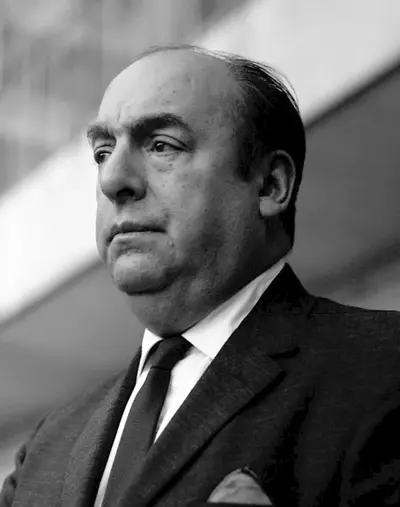
Ricardo Eliécer Neftalí Reyes Basoalto, better known by his pen name and, later, legal name Pablo Neruda (/nəˈruːdə/; Spanish: [ˈpaβlo neˈɾuða]), was a Chilean poet-diplomat and politician who won the Nobel Prize for Literature in 1971. Neruda became known as a poet when he was 13 years old, and wrote in a variety of styles, including surrealist poems, historical epics, overtly political manifestos, a prose autobiography, and passionate love poems such as the ones in his collection Twenty Love Poems and a Song of Despair (1924).
