Marshall McLuhan Quotes
Our technology forces us to live mythically
McLuhan, Marshall. Understanding Media: The Extensions of Man. McGraw-Hill, 1964.


He had been responsible for the violent deaths of thousands of people, mostly innocent civilians in his attempt to establish an independent nation of “Kurdistan.” His position is that with technology and the media, violence and terrorism are no longer necessary for a dissident political independence movement to succeed. However, he was found guilty for his past violence and was jailed for life. The PKK continued its terrorism. See {620143}.


Most scientists do not have the skill or the totality of knowledge to accurately predict the effect of scientific research and learning on society. Many are not interested. Those who try to communicate with politicians and the public are usually met with indifference or suspicion. Above all, the scientific and mathematical literacy of the public is so weak, that it is impossible in much of science to even explain the science to the lay public much less explain its implications. Soddy was a bit of an idealist from a class society and he felt the upper classes should be better informed by scientists.

Born was a refugee who escaped to England from Nazi Germany.

Most of the communications technologies were not necessities but were conveniences which so changed society that they became necesseties years after they were ivented and first deployed.

Not only did the Radio fail to inhibit war, but Marconi completely missed the way demagogues like Hitler and Mussolini would use propaganda via the radio to induce war in their societies. They did not justify war; they made it a national duty. Media inventors seem to have an overly optimistic view of the invention’s effect. See {635261}.


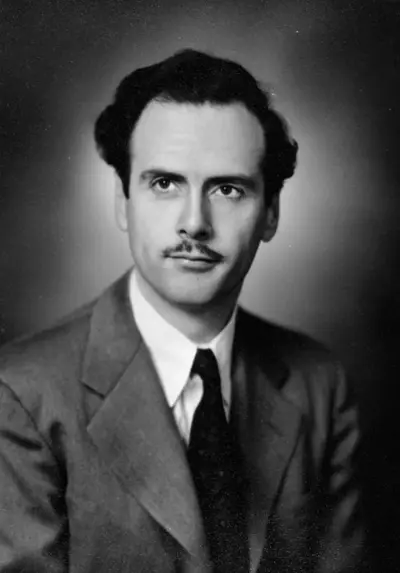
Herbert Marshall McLuhan CC was a Canadian philosopher, whose work is among the cornerstones of the study of media theory. Born in Edmonton, Alberta, and raised in Winnipeg, Manitoba, McLuhan studied at the University of Manitoba and the University of Cambridge. He began his teaching career as a professor of English at several universities in the US and Canada before moving to the University of Toronto in 1946, where he remained for the rest of his life.
