Phyllis Schlafly Quotes
Our runaway judiciary is badly in need of restraint by Congress.
Schlafly, Phyllis. The Supremacists: The Tyranny of Judges and How to Stop It. Spence Publishing, 2004, p. 12.


Jefferson’s fears were later reinforced by John Marshall in Marbury v. Madison {606468}

Some of the Founding Fathers did not conceive of the kind of judiciary where Federal courts could nullify an act of the Congress by declaring a law unconstitutional. Morris was one. Others did. The Constitution is not very explicit on this point, but the nation has settled with a process that would have surprised Morris and a few others.
Jefferson, like most Presidents and ex-presidents, had his concerns about the judiciary and judicial checks, especially of the Executive Branch.


The separation of powers concept was adopted from the American Constitution of the previous year. See {585394}.

In many nations, there is little judicial independence from the government. Judicial decisions that thwart government sometimes produce retaliation ranging from reducing the pay or staff of judges, threatened investigations and impeachment even arrest and execution---sometimes by government ‘death squads’. Even in the United States, the beginning of the 21st century, was fraught with so many examples of judicial intimidation threats, that two Supreme Court justices began speaking throughout the country to educate the public to this problem. In general, the more democratic and free a nation is, the more frequently the courts will disallow activities of the executive and even the legislature.
In 2002 the corrupt Indonesian Courts ruled that a very solvent Canadian company Manulife was bankrupt so that others could get control. The international financial and political community wanted the Indonesian government to intervene and reverse the rulings, but historically the courts had no independence and had been tools of the government.


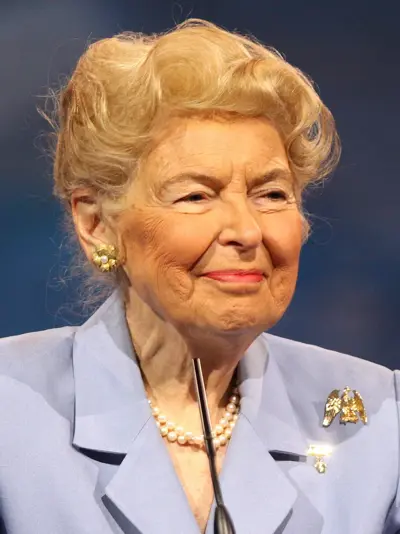
Phyllis Stewart Schlafly was an American attorney, conservative activist and author. She held traditional conservative social and political views, opposed feminism, gay rights and abortion, and successfully campaigned against ratification of the Equal Rights Amendment to the U.S. Constitution. She was opposed in turn by moderates and liberals for her attitudes on sex, gender roles, homosexuality and a number of other issues. More than three million copies of her self-published book, A Choice Not an Echo (1964), a polemic against Republican leader Nelson Rockefeller, were sold or distributed for free. Schlafly co-authored books on national defense and was critical of arms control agreements with the Soviet Union. In 1972, Schlafly founded the Eagle Forum, a conservative political interest group, and remained its chairwoman and CEO until her death in 2016 while staying active in traditional conservative causes.
