Lawrence M. Krauss Quotes
Our modern conception of the universe is so foreign to what even scientists generally believed a mere century ago that it is a tribute to the power of the scientific method and the
creativity and persistence of humans who want to understand it.
Krauss, Lawrence M. A Universe from Nothing: Why There Is Something Rather than Nothing. Free Press, 2012.

We have two opposite dynamics operating today. On the one hand the scientific breakthroughs like Quantum Mechanics and genetic engineering widen the intellectual gap immensely between the average person (and politicians) and the scientist—at a time when society must make enormous decisions on scientific matters. On the other hand, there have never been so many people before educated in the sciences. There are many (not a majority) high school students who today understand Relativity and even well and broadly educated non-science college graduates are often familiar with Relativity, Quantum Mechanics, and other scientific breakthroughs of the 20th century. The world as a whole has never had so many scientifically literate people as today, nor has it ever had so many scientifically illiterate people today.


This quotation illustrates a way in which science is frequently at odds with politics. Our politicians realize the importance of scientific research to our standard of living, economy, and quality of life. So they want to support research and development programs. However, budgeting and planning for these in terms of expected or desired results is virtually impossible. So scientific research, especially basic research is not susceptible to the usual planning and monitoring that is so common and effective in construction projects or other applications of science and technology. It is hard to predict when and which scientists will have the next critical idea. It is very difficult to hold scientists or administrators accountable for scientific research results because of this factor. See {624876}.


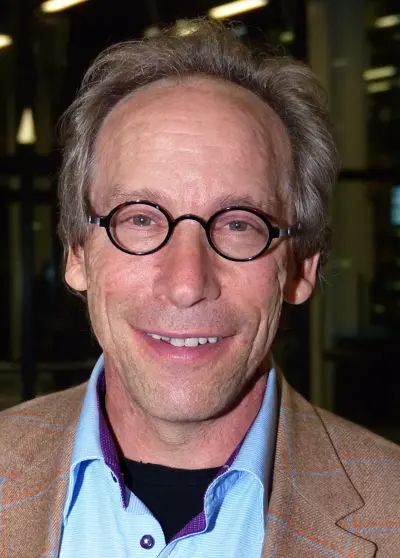
Lawrence Maxwell Krauss is an American-Canadian theoretical physicist and cosmologist who previously taught at Arizona State University, Yale University, and Case Western Reserve University. He founded ASU's Origins Project, now called ASU Interplanetary Initiative, to investigate fundamental questions about the universe and served as the project's director.
