Marilynne Robinson Quotes
One of the things that is nice about these old pastors - they were young at the time - who went into the Middle West is that they were real humanists. They were often linguists, for example, and the schools that they established were then, as they are now, real liberal arts colleges where people studied the humanities in a very broad sense. I think that should be reflected in his mind; appropriately, it is.
Robinson, Marilynne. Interview with Sarah Fay. "The Art of Fiction No. 198." The Paris Review, no. 186, Fall 2008.


He raised an intellectual alarm that scientists were generally ignorant of the liberal arts and non-scientists were scientifically illiterate. This was not good for society where both were needed for making public policy and developing our society. He was quite influential in British and American higher education where many colleges added required science courses to liberal arts curricula and vica versa. However by the 21st century, the sciences had advanced at such a rapid pace, that the taking of a few college level science courses was not sufficient to produce a scientific literacy, and the problem was no better than in the 1950s.


Toward the end of the 20th century, some people argued that using Indian names or identifying a school or sport team as “Braves” or “Indians” is inappropriate. Dartmouth, however has some claim, like the Carlisle Indians, to the Dartmouth Indians name given its history.


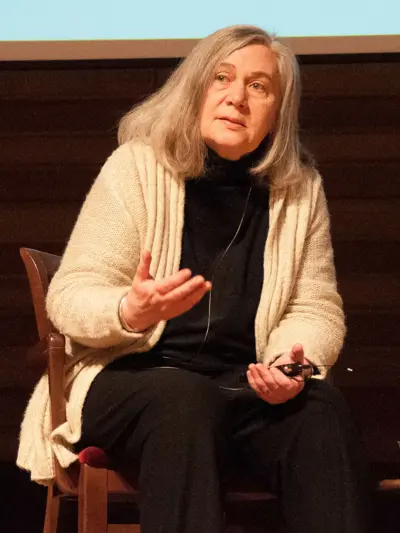
Marilynne Summers Robinson is an American novelist and essayist. Across her writing career, Robinson has received numerous awards, including the Pulitzer Prize for Fiction in 2005, National Humanities Medal in 2012, and the 2016 Library of Congress Prize for American Fiction. In 2016, Robinson was named in Time magazine's list of 100 most influential people. Robinson began teaching at the Iowa Writers' Workshop in 1991 and retired in the spring of 2016.
