W. H. Auden Quotes
One of the most horrible, yet most important, discoveries of our age has been that, if you really wish to destroy a person and turn him into an automaton, the surest method is not physical torture, in the strict sense, but simply to keep him awake, i.e., in an existential relation to life without intermission.
Auden, W. H. The Dyer's Hand and Other Essays. Random House, 1962.


On a tour of America, Dickens visited Eastern State Penitentiary, a Pennsylvania prison opened in 1829 which was supposedly a “modern” reform in law enforcement. Rather than work gangs or mandatory factory work and filthy living conditions, this was the first “penitentiary” in America. The guilty convicts would be in a small clean but bare cell for all but 1 hour or less a day, and the only thing in the cell other than soap and a toothbrush was a Bible. The convict was supposed to spend his entire sentence reading the Bible and being penitent for his crimes. It destroyed most inmates mentally until the Supreme Court ruled in 1890 that total solitary confinement was unconstitutional.

The reason for these creative phrases was that President George W, Bush had publicly stated that it was United States policy to follow American and International Law and the U. S. does “not torture”. The CIA then decided that it should destroy the videos of the episodes where these euphemisms were used when they were accused of torture and there were calls for prosecution for violation of U. S. law.

Neilson had flown in the Doolittle Raid on Tokyo. It was the first bombing of Tokyo in WWII. He was shot down and captured. He was tortured including the torture of ‘waterboarding.’ The Japanese who administered the torture and who allowed it were tried before the International Military Tribunal for the Far East—the Tokyo War Crime Trials. They were convicted and punished. In the first decade of the 21st century the George W, Bush Administration argued that waterboarding was not necessarily torture despite the fact that Americans had tried and punished foreigners who engaged in the practice and even Americans who did. It was completely outlawed by military regulations but some Americans felt that it should be allowed by the CIA in dealing with terrorists.


At that time in American History, the George W. Bush Justice Department had a small team of lawyers who wrote a legal brief that defined torture in such a way that many of the most common forms of torture were no longer legal torture, even though they had been torture in American law and were again torture after this embarrassing episode of American history. The renamed techniques were called “enhanced interrogation” and a few terrorist suspects were subjected to it before the rules and laws were changed and the “legal opinions” nullified. The FBI and military intelligence did not use the so called enhanced interrogation techniques as they felt that torture produced unreliable intelligence as the victim will say anything the questioner wants to hear to end the torture. They also thought the Justice department memo was sloppy and defective legal work. Senator McCain was a particular expert on torture in that he had, during the Vietnam War, been captured and imprisoned for 7 years during which he had been tortured on several occasions.
Two years later the CIA adopted an official formal policy against inhumane treatment during interrogation and the manual was changed.


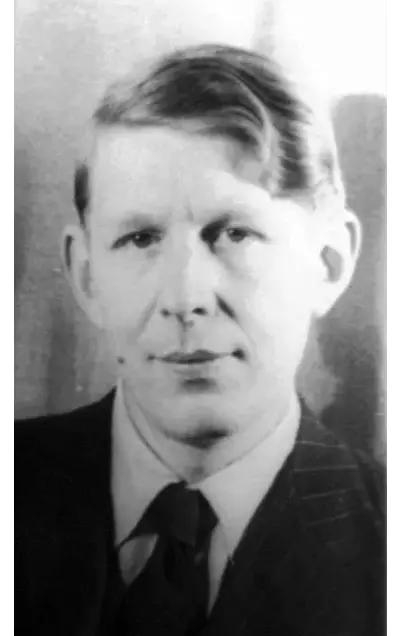
Wystan Hugh Auden was an Anglo-American poet. Auden's poetry was noted for its stylistic and technical achievement, its engagement with politics, morals, love, and religion, and its variety in tone, form, and content. Some of his best known poems are about love, such as "Funeral Blues"; on political and social themes, such as "September 1, 1939" and "The Shield of Achilles"; on cultural and psychological themes, such as The Age of Anxiety; and on religious themes such as "For the Time Being" and "Horae Canonicae".
