Albert Camus Quotes
Once crime was as solitary as a cry of protest; now it is as universal as science. Yesterday it was put on trial; today it determines the law.
Camus, Albert. The Rebel: An Essay on Man in Revolt. Translated by Anthony Bower, Vintage Books, 1991, p. 3.


Justice Black would quote the 1st Amendment—"Congress shall make no law abridging the freedom of speech or of the press"—then slam his hand on his desk and exclaim:

Odo of Chatillon-Sur-Marne. The Pope was addressing officials of Christian counties throughout Europe. Crime control then seems to have been a hot political issue as it is today.

There were anti-Vietnam war protests going on throughout the country that year. In many of them, especially at universities, protesters took over buildings, and shut down operations. Most Republicans and many Democrats wanted the protests to end, mostly because they feared the spread of the anti-Vietnam war sentiment would catch on and become a position held by most Americans (which it did just as they feared,) They were restrained in what they could do legally by the 1st Amendment. However, there was much breaking of minor laws in many of the demonstrations and that was the focus of the effort to suppress the demonstrations. But in the tradition of civil disobedience, it was the lawbreaking that tended to get the press attention and coverage, so the leaders of the anti-war movement advocated even more lawbreaking, hence Dirksen’s statement to the convention.


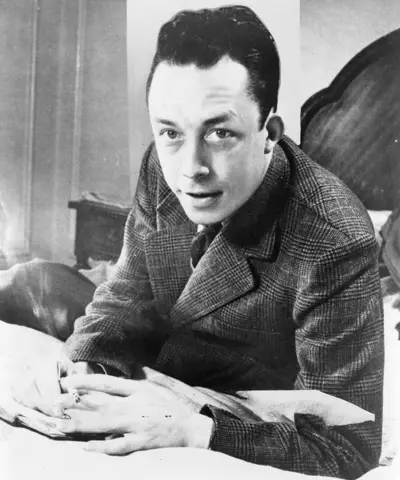
Albert Camus was a French philosopher, author, and journalist. He won the Nobel Prize in Literature at the age of 44 in 1957, the second-youngest recipient in history. His works include The Stranger, The Plague, The Myth of Sisyphus, The Fall, and The Rebel.
