Robert M. Gates Quotes
On the foreign policy side, there's the risk of being too spontaneous and too disruptive where you end up doing more harm than damage. And figuring out that balance is where having strong people around you matters.
Gates, Robert M. Interview by John Dickerson. Face the Nation, CBS, 14 May 2017.


Poland and most other European Governments and their people were very fearful of a strong Germany with WWII always present in their memories. However, at this time the Conservative German government had very passive policies with respect to the European Community and some German leadership and activism was thought necessary by many leaders of Europe. Germany was one of the strongest economies in Europe and without the WWII legacy of aggression would normally be expected to be more of a European leader.


In his relationship with FDR General Marshall was the Senior Army Officer and Chief of Staff of the Army during WWII. What was amazing about Marshall was how he argued forcefully from his narrower perspective as the leader of the army, but did not resent it when President Roosevelt decided differently citing wider, non-military consideration. Roosevelt had the almost unique ability to make decisions from the big picture perspective and have most of his subordinates with narrower responsibility and perspective accept understandingly.


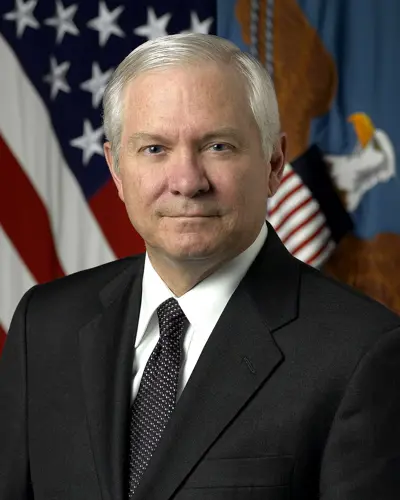
Robert Michael Gates is an American intelligence analyst, and university president who served as the 22nd United States secretary of defense from 2006 to 2011. He was originally appointed by President George W. Bush and was retained for service by President Barack Obama. Gates began his career serving as an officer in the United States Air Force but was quickly recruited by the Central Intelligence Agency (CIA). Gates served for 26 years in the CIA and the National Security Council, and was Director of Central Intelligence under President George H. W. Bush. After leaving the CIA, Gates became president of Texas A&M University and was a member of several corporate boards. Gates served as a member of the Iraq Study Group, the bipartisan commission co-chaired by James A. Baker III and Lee H. Hamilton, that studied the lessons of the Iraq War.
