Thomas Pogge Quotes
Often vastly more important, international agreements are not routinely published in draft form or publicly debated, and civil society organizations and ordinary citizens often learn of important global institutional design decisions only after they have already been finalized and adopted. The only reliable way to be kept informed and to exert timely influence is by lobbying and paying the politicians and their negotiators.
Pogge, Thomas. "Interview with Thomas Pogge." The Straddler, 2011.


The Congressman, who had not been previously an enthusiastic leader for this type of reform, found himself with a chance to become Majority Leader of the House of Representatives. The previous leader was under indictment and was linked, along with other Republican Congressman to a Lobbyist who had pleaded guilty to bribing Congressmen. Another Republican Congressman had plead guilty to the felony of accepting bribes. The party that Controlled Congress was fearful of a voter backlash over the corruption—especially the role of lobbyists in giving money to Congressional campaigns. Bainor became a reform leader.


In the 1787 Constitutional Convention in Philadelphia, the delegates agreed that the there would be no official transcript and that the debates were to be kept secret:

think tanks and advocacy organizations

Wisconsin had a particularly tough lobbying law which was to be administered by the secretary of state, who found himself in the embarrassing position of discovering that he, himself, had technically violated the law by sending a signed, political mailing to a lobbyist. He turned himself in, and paid a $50 fine.


The TPP was the first Trade Agreement that had ever been classified as “Secret” when it was being negotiated. This was one of the most hotly debated policies of the era. Even Congress could not get a look at what was being negotiated although the Senate would have to ratify it when finished for it to become effective. .On the surface, it is outrageous that a non-military or defense activity should be secret in a democracy. What could be wrong with the Congress and the public being aware of a trade negotiation while it was being formulated and negotiated? Kirk and other apologists for the secrecy policy argue that because of the trade-off relationships among different clauses and facets of a trade treaty, there are many proposals that are made just to initiate a bargaining position, and the negotiators themselves neither expect nor intend those proposals to be a part of the final treaty. To then have groups of Americans get upset and start a lobbying position against a treaty when what they object to is not ever going to be in the treaty poisons in the public mind the entire treaty which then could be killed for something that was never real to begin with. A similar thing happened with the Obamacare legislation. Congress drafted the various clauses and many were included as part of the bargaining process or misunderstood because of poor first drafting. Opposition to those clauses set a tone of animosity against the bill as a whole. After the bill was passed, the clauses that were most unpopular or misinterpreted were the main reason that citizens gave for opposing Obamacare even though they were not in the legislation. Advocates of secrecy point out that the original Constitutional Convention was entirely secret with all the delegates agreeing that if each and every proposal that was debated were public, there would develop so much opposition that the result could never be ratified later. Yet it is hard to argue against transparency of government processes in a democracy.


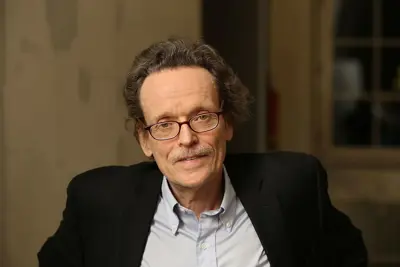
Thomas Winfried Menko Pogge is a German philosopher and is the Director of the Global Justice Program and Leitner Professor of Philosophy and International Affairs at Yale University. In addition to his Yale appointment, he is the Research Director of the Centre for the Study of the Mind in Nature at the University of Oslo, a Professorial Research Fellow at the Centre for Applied Philosophy and Public Ethics at Charles Sturt University and Professor of Political Philosophy at the University of Central Lancashire's Centre for Professional Ethics. Pogge is also an editor for social and political philosophy for the Stanford Encyclopedia of Philosophy and a member of the Norwegian Academy of Science and Letters.
