Samuel Richardson Quotes
Of what violences, murders, depredations, have not the epic poets, from all antiquity, been the occasion, by propagating false honor, false glory, and false religion?
Richardson, Samuel. The History of Sir Charles Grandison. S. Richardson, 1754.


At Tippecanoe, General Harrison defeated the Indians but suffered over 60 of his men killed and many more wounded. Newly supplied modern English weapons were found on captured Indians. There was a call for war with England:

This reflected a commonly held belief that the gun was an ignoble invention.

This law is used to free “honor killing” murderers who have killed female relatives for what they thought was a sexual transgression that “stained the family honor.” The custom exists in some other countries but rarely with such sanction of law. In the case of Article 548 the word “witnesses” is interpreted to mean “heard about it” or even has some reason to suspect it. Each year in Syria hundreds of innocent women, and even girls are killed with impunity. In one 2007 case a 15 year old girl was kidnapped and raped. When she was freed by the police she was jailed. A cousin got her released by agreeing to marry her, but after the marriage, one of her own brothers, with the knowledge and concurrence of the rest of the family, butchered her with a knife. The family then held a party to celebrate the cleansing of their honor.


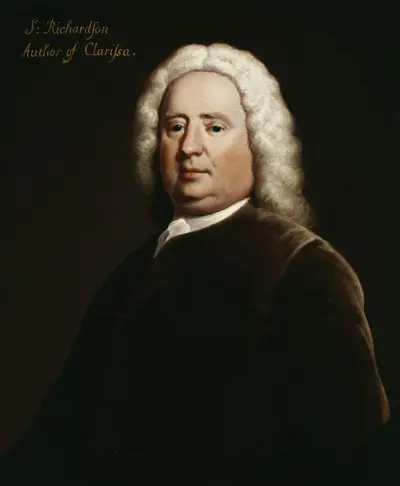
Samuel Richardson was an English writer and printer best known for three epistolary novels: Pamela; or, Virtue Rewarded (1740), Clarissa: Or the History of a Young Lady (1748) and The History of Sir Charles Grandison (1753). He printed almost 500 works during his life, including journals and magazines, working periodically with the London bookseller Andrew Millar. Richardson had been apprenticed to a printer, whose daughter he eventually married. He lost her along with five sons, but remarried and had four daughters who reached adulthood, but no male heirs to continue the print shop. As it ran down, he wrote his first novel at the age of 51 and immediately joined the popular, admired writers of his day. Leading figures he knew included Samuel Johnson and Sarah Fielding, and the eminent physician and Behmenist George Cheyne and the theologian and writer William Law, whose books he printed. At Law's request, Richardson printed some poems by John Byrom. In the literary world he rivalled Henry Fielding, and the two responded to each other's literary styles.
