C. S. Lewis Quotes
Of all tyrannies, a tyranny sincerely exercised for the good of its victims may be the most oppressive. It would be better to live under robber barons than under omnipotent moral busybodies. The robber baron’s cruelty may sometimes sleep, his cupidity may at some point be satiated; but those who torment us for our own good will torment us without end for they do so with the approval of their own conscience.
Clive Staples Lewis, 1898-1963, British Essayist & Novelist, God in the Dock (1948)
Sourced by: Eigen's Political and Historical Quotations


This quotation is inscribed on the FDR Memorial in Washington DC.


This quotation so impressed Thomas Jefferson that he wrote it in his Commonplace Book.


He was referring to governments that imposed some form of morality in their citizens. Free governments do no dictate a morality and require their citizens to follow it. He was very much opposed to Prohibition which he saw as a poor government—Herbert Hoover’s Administration—which was imposing its narrow morality on all. He was very suspicious of government actions where the government claimed that the action was for moral objectives. This is a classic Libertarian view. In general, it is Fundamentalists and ideologues who want to impose their particular morality on all. See {620693} for a related idea.


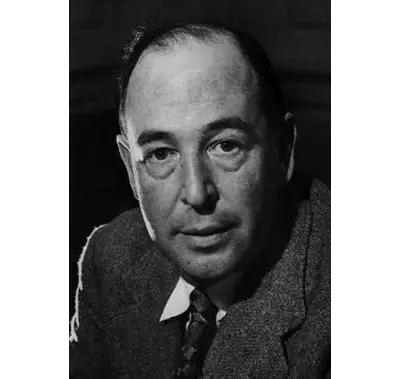
Clive Staples Lewis was a British writer and lay theologian. He held academic positions in English literature at both Oxford University (Magdalen College, 1925–1954) and Cambridge University (Magdalene College, 1954–1963). He is best known for his works of fiction, especially The Screwtape Letters, The Chronicles of Narnia, and The Space Trilogy, and for his non-fiction Christian apologetics, such as Mere Christianity, Miracles, and The Problem of Pain.
