John Sherman Cooper Quotes
Now, people have said that somebody told them that they saw somebody on the railroad bank or saw somebody going over the bank, but no one has ever been able to show any cartridges, any rifle, any pistol, no one has ever found anything other than the evidence about Oswald.
United States, Congress, House, Select Committee on Assassinations. Investigation of the Assassination of President John F. Kennedy: Hearings Before the Select Committee on Assassinations of the U.S. House of Representatives, Ninety-Fifth Congress, Second Session. Vol. 3, U.S. Government Printing Office, 1979.


Most Americans do not believe the official explanation of the Warren Commission that Oswald acted alone. However, Kerry was the first of very few high government officials who would express this opinion in public. The fact that Oswald himself was then assassinated in the Dallas Police Station denied any information from him. Then were many foul ups of the investigations that most analysts of the assassination believe were foul ups or cover-ups of other wrong doing. Examples were: Parts of Kennedy’s brain was missing and the autopsy notes were burned by the naval physician who did the autopsy before anyone could see them; the FBI and CIA both lied to the Warren Commission, President Johnson, and Attorney General Robert Kennedy; Both the FBI and the CIA had files on Oswald; the CIA had tried to assassinate Fidel Castro before including paying the Mafia to do it (The efforts were bungled and Castro found out about most; Oswald had w few weeks earlier tried to assassinate the right wing John Birch Society fanatic, General Edwin Walker and the CIA and FBI missed that.); Shortly before the assassination Walker and his fanatics printed and distributed a “Wanted for Treason” poster accusing President Kennedy of selling out America. (See {635732}.)


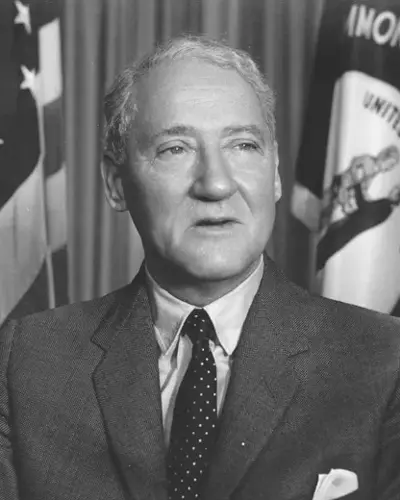
John Sherman Cooper was an American politician, jurist, and diplomat from the Commonwealth of Kentucky. He served three non-consecutive, partial terms in the United States Senate before being elected to two full terms in 1960 and 1966. He also served as U.S. Ambassador to India from 1955 to 1956 and U.S. Ambassador to East Germany from 1974 to 1976. He was the first Republican to be popularly elected to more than one term as a senator from Kentucky and, in both 1960 and 1966, he set records for the largest victory margin for a Kentucky senatorial candidate from either party.
