Adam Smith Quotes
No society can surely be flourishing and happy, of which the greater part of the members are poor and miserable. It is but equity, besides, that they who feed, clothe and lodge the whole body of the people, should have such a share of the produce of their own labor as to be themselves tolerably well fed, clothed and lodged.
Adam Smith, 1723-1790, Scottish Political Economist, The Wealth of Nations, 1776
Sourced by: Eigen's Political and Historical Quotations

She was writing about the textile mills of Manchester, England in the Industrial Revolution. Workers’ wages were so low that many of them could not feed themselves and their family decently


He was referring to the success of the Clinton Administration.


At the time of this quotation, the nation had gone through more than 3 decades of enormous increase in prosperity for the wealthy, and modest gains for the highly skilled, technically trained workers. However, correcting for inflation, average salaries did not increase at all. The middle class was particularly hard hit. Only 20 percent of the population benefitted from the growth at all; however, the 1 percent had rarely prospered more. Kenworthy’s principle did not apply for this period of American history.

This is one of the classic requirements of a just society of the ancient Greeks which capitalism has not yet been able to achieve and is the major weakness cited by critics.

Peace on Earth
The only publication with a full time Poverty beat


During the depression the senator warned his fellow Republicans of relying too much on the strategy of attacking the "unconstitutionality" of many of the New Deal programs while ignoring the economic and political realities of the time:


The argument here is that since the poor working class wages are so low, that they cannot save for an emergency, therefore the society must provide for welfare for those who might otherwise starve.


Often referred to as “Father of the Green Revolution” for his contributions to food growing throughout the world
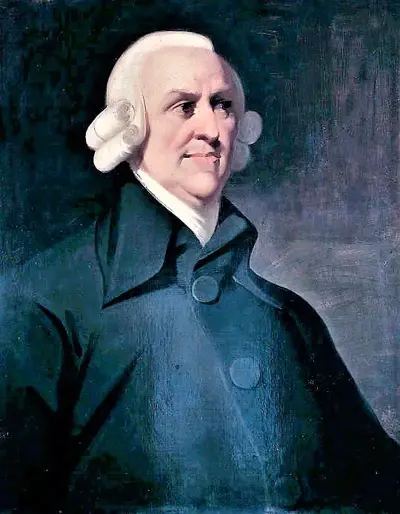
Adam Smith FRSA was a Scottish economist, philosopher as well as a moral philosopher, a pioneer of political economy, and a key figure during the Scottish Enlightenment, also known as ''The Father of Economics'' or ''The Father of Capitalism''. Smith wrote two classic works, The Theory of Moral Sentiments (1759) and An Inquiry into the Nature and Causes of the Wealth of Nations (1776). The latter, often abbreviated as The Wealth of Nations, is considered his magnum opus and the first modern work of economics. In his work, Adam Smith introduced his theory of absolute advantage.
