Booker T. Washington Quotes
No race can prosper till it learns that there is as much dignity in tilling a field as in writing a poem.
Washington, Booker T. Up from Slavery: An Autobiography. Doubleday, Page & Co., 1901, p. 220.


He was the only Black member of Congress at the time.

Armstrong was a Union military chaplain with the troops that had captured Petersburg, Virginia. It is interesting how much he and apparently many of the Union Soldiers saw their part in the war as a crusade to reform the South. Also, note that although the South was fighting to preserve the slavery system that benefitted the rich, the rich often did not fight or join the military. Surprisingly to us today, if a man owned a certain number of slaves, he was then exempt from required military service.


Actually originated by William Jennings Bryan in a 1900 campaign speech. See {640984} . The slogan became the name and first line of a poem and also a song. See {609937}


While this was a type of “Equal Rights Amendment”, It emphasized dignity rather than operations. For example, adultery was made a crime if committed by a woman (not for a man), And women could be dismissed from a job, simply because they were pregnant. And unusual aspect of this quotation is the fact that it applies to equality of dignity of Social status. In America we have this as an unwritten concept of fairness and egalitarianism, but it is not followed very much and certainly not guaranteed by our Constitution.
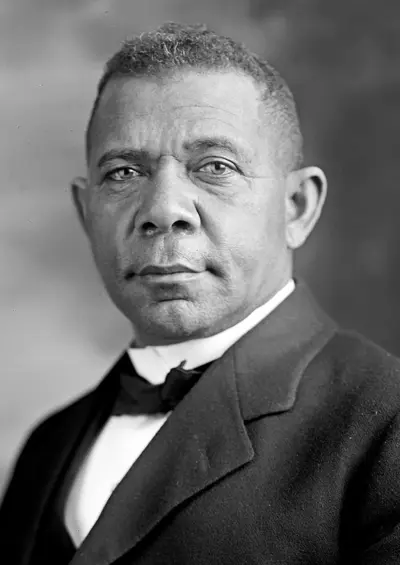
Booker Taliaferro Washington was an American educator, author, orator, and adviser to several presidents of the United States. Between 1890 and 1915, Washington was the dominant leader in the African American community and of the contemporary black elite. Washington was from the last generation of black American leaders born into slavery and became the leading voice of the former slaves and their descendants. They were newly oppressed in the South by disenfranchisement and the Jim Crow discriminatory laws enacted in the post-Reconstruction Southern states in the late 19th and early 20th centuries.
