Juvenal Quotes
No man ever became very wicked all at once.
Juvenal. Juvenal and Persius. Translated by G. G. Ramsay, Harvard University Press, 1918, Satire 2, line 83.


Harrison was a General at the time.


When the British first colonized South Africa, the area they used was akmost uninhabited or very sparcely so. However, some Black tribes (including the Zulus) were moving from the north and themselves were colonizing or annexing the areas to their kingdom. The British were most interested in Trading so did not have large land asperations. The Dutch white Boer Africanners, in contrast, wanted to farm the lands and use the range for their cattle. They wanted the land. The English policy was that there would be friendly relations with the Black tribes surrounding their Cape Colony and no one should take their land. However the Boers started attacking the Black areas and seizing their farms and villages. At first, the English assumed that the Blacks would easily be able to ward off the invasion as the Afrikanners had no professional troops like the British. However, the neighboring tribes were not very warlike or good fighters. They were being overrun by the Zulus coming from the North and the Boers from the South. The British Government had a real problem in that they would have to have British soldiers fight the white Afrikanners if they wanted to stop the illegal white invasions. This was the root of the Boer War where the British would be fully at war with the Africanners.


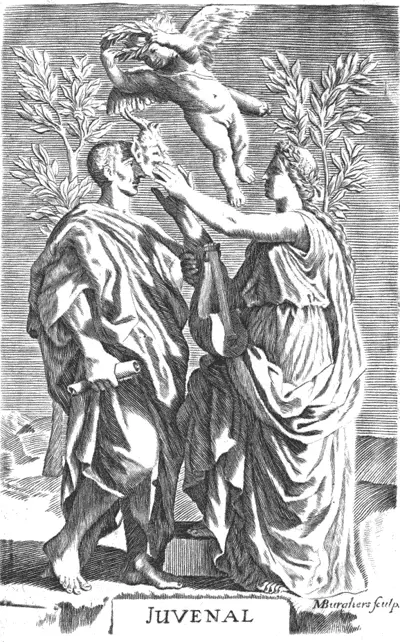
Decimus Junius Juvenalis (Latin: [ˈdɛkɪmʊs ˈjuːniʊs jʊwɛˈnaːlɪs]), known in English as Juvenal (/ˈdʒuːvənəl/ JOO-vən-əl), was a Roman poet active in the late first and early second century AD. He is the author of the collection of satirical poems known as the Satires. The details of the author's life are unclear, although references within his text to known persons of the late first and early second centuries AD fix his earliest date of composition. One recent scholar argues that his first book was published in 100 or 101. Because of a reference to a recent political figure, his fifth and final surviving book must date from after 127.
