Thomas A. Edison Quotes
Nature is what we know. We do not know the gods of religions. And nature is not kind, or merciful, or loving. If God made me - the fabled God of the three qualities of which I spoke: mercy, kindness, love - He also made the fish I catch and eat. And where do His mercy, kindness, and love for that fish come in? No; nature made us - nature did it all - not the gods of the religions.
Marshall, Edward. "Thomas A. Edison on Immortality." The New York Times Magazine, 2 Oct. 1910.


Einstein’s religious views were very sophisticated and unusual. He was a deist—a believer in God. He was of Jewish background and like some Protestant sects, Jews can interpret scripture and the nature of God as individuals. They need not follow a particular doctrine. However Einstein had a very complex vision of God—as he described it, the “God of Spinoza”—a 17th century Rabbi and Philosopher whose views were so radical that his books were banned and he was excommunicated by the Rabbis of Holland, a rarity in Judaism. This view of God is not the human-related form but a view of God as an abstraction everpresent and a prime mover inherent in nature, the world and in humanity.


When the priest died, 3 handwritten manuscripts were found written and signed by him in which he attacked religion in general and the church and the Bible in particular. His Testament was read by Voltaire and Denis Diderot among others and he was very influential in their development as opponents of organized religion. This quotation has been one of the bases of secular humanism which would then develop after he had died.


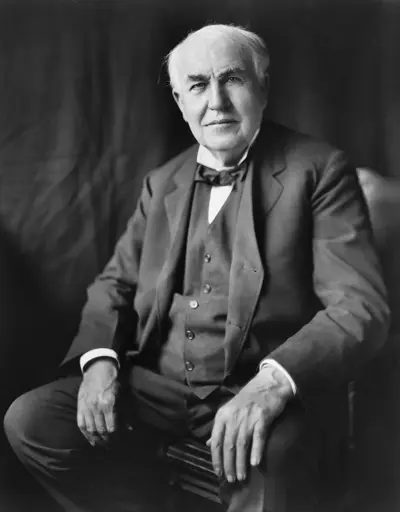
Thomas Alva Edison was an American inventor and businessman who has been described as America's greatest inventor. He developed many devices in fields such as electric power generation, mass communication, sound recording, and motion pictures. These inventions, which include the phonograph, the motion picture camera, and early versions of the electric light bulb, have had a widespread impact on the modern industrialized world. He was one of the first inventors to apply the principles of organized science and teamwork to the process of invention, working with many researchers and employees. He established the first industrial research laboratory.
