James Joyce Quotes
Nations have their ego, just like individuals.
Power, Arthur. Conversations with James Joyce. Millington, 1974, p. 64.


The French have for over 1000 years had a nationalistic ego that was, compared to other countries, very extreme. Highly nationalistic Frenchmen have almost always felt that the French were not proud enough of their exalted role in the history of human civilization. De Gaulle was the most extreme but Chevenement was not too far behind.


Many Americans were terribly embarrassed when the Congress could not even pass a budget for the operation of the government. It was hard to think of America as an exemplary democracy.


This quotation shows the level of denial that De Valera and other Irish leaders were in over Nazi Germany. See {639721} for other Irish Free State denial. Over 70,000 Irishmen and women rejected the moral stand of their government, and volunteered for the British Army to the great distress of the Free State leaders like De Valera.

See {640102} and {640101} for his view of what a nation is not.

What is particularly interesting about this quotation is that at the time, this was a common concern by political and social thinkers of the West. Here however, we learn that there was apparently the same concern and problem ongoing in the Muslim Middle East.
This was more than a decade after the fal of the Soviet Union.


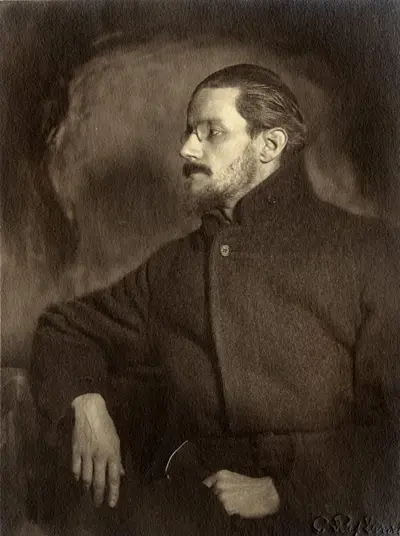
James Augustine Aloysius Joyce was an Irish novelist, short story writer, poet, teacher, and literary critic. He contributed to the modernist avant-garde movement and is regarded as one of the most influential and important writers of the 20th century. Joyce is best known for Ulysses (1922), a landmark work in which the episodes of Homer's Odyssey are paralleled in a variety of literary styles, most famously stream of consciousness. Other well-known works are the short-story collection Dubliners (1914), and the novels A Portrait of the Artist as a Young Man (1916) and Finnegans Wake (1939). His other writings include three books of poetry, a play, his published letters and occasional journalism.
