Robert Edwards Quotes
My first ideas of human in vitro fertilization (IVF) arose with my Ph.D. in Edinburgh University in the early 1950s. Supervised by Alan Beatty, my research was based on his work on altering chromosomal complements in mouse embryos.
Edwards, Robert G. "The Bumpy Road to Human In Vitro Fertilization." Nature Medicine, vol. 7, no. 10, 2001, p. 1091.


When a couple sought assistance from a fertility clinic, the best medical procedure to fertilize a few female egg cells with sperm. After a few days of development, the seemingly best embryo is selected for implantation in the mother. The others are usually frozen so that they can be used later if there is a miscarriage or the baby dies in childbirth. The Senator and a few other religious fundamentalists believe that the fertilized cell clusters are actually human beings. Therefore if there is a successful birth, the remaining ones should not be used for research using the embryonic stem cells. On the other hand, many are often discarded as most people do not see the cell clusters as a human being but as a potential human being just as a pile of bricks and a truck of cement is not a house but is a potential house if things are done properly.

At the time the president made this quotation there were over 400,000 frozen embryos stored in fertility clinics across the country that were no longer necessary for the couples who had created them and for which no other couples could be found. Each costs about $2,000 a year to maintain in a viable state. Some are destroyed as no longer necessary and others are given to scientists for research. Most just stay in frozen storage with no prospect of ever being brought to term.


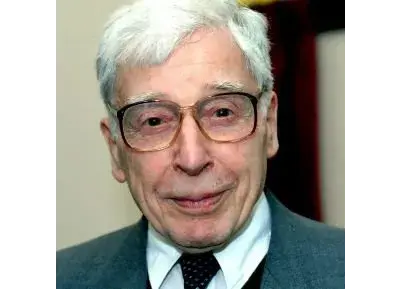
Sir Robert Geoffrey Edwards CBE FRS MAE was an English physiologist and pioneer in reproductive medicine, and in-vitro fertilisation (IVF) in particular. Along with the surgeon Patrick Steptoe, and the nurse Jean Purdy, Edwards successfully pioneered conception through IVF, which led to the birth of Louise Brown on 25 July 1978. They founded the first IVF programme for infertile patients and trained other scientists in their techniques. Edwards was the founding editor-in-chief of Human Reproduction in 1986. In 2010, he was awarded the Nobel Prize in Physiology or Medicine "for the development of in vitro fertilization".
