Susumu Tonegawa Quotes
My father was an engineer working for a textile company that had several factories scattered in rural towns in the southern part of Japan.
Tonegawa, Susumu. "Susumu Tonegawa – Biographical." Les Prix Nobel. The Nobel Prizes 1987, edited by Wilhelm Odelberg, Nobel Foundation, 1988.


Fortunately for America, Jefferson did not get his wish. Jefferson did mellow on this point as he got older. See {606440} for a related quotation 27 years later.

Earlier, Jefferson was opposed to manufacturing in America as factories were a social blight in Europe which he wanted to keep out of the United States. He felt that we could import whatever we needed from Europe and not have the evils of industrialization. However, with the War of 1812, the Barbary Pirates and his mellowing when no longer President, and his willingness to change his positions as he learned more, he issued this letter. See another the following year: {615634}. His was considered such an important change of position—today we would accuse him of a flip flop— that other journals and periodicals reprinted the letter and commented upon his change. Despite his changed position, most Americans believe that Jefferson was opposed to manufacturing and industrialization for his entire life—not just the first part.

The smaller German towns had not been targets for allied bombing and German censorship kept most Germans from realizing that the factories in the larger cities were being attacked. But the “rules of war” which the Germans had abandoned early in the war by bombing civilian targets in England and other European cities, required that only military targets be attacked. If a nation placed its factories or military bases in the midst of civilian populations, then the rules of war no longer protected the civilians. So the allies were within their rights by bombing the smaller towns where they targeted factories. However, this quotation is used by some critics to show that FDR’s motive was not the destruction of factories per se, but the breaking of German civilian morale. They argue that the allies were following the letter of the law, but not the spirit.


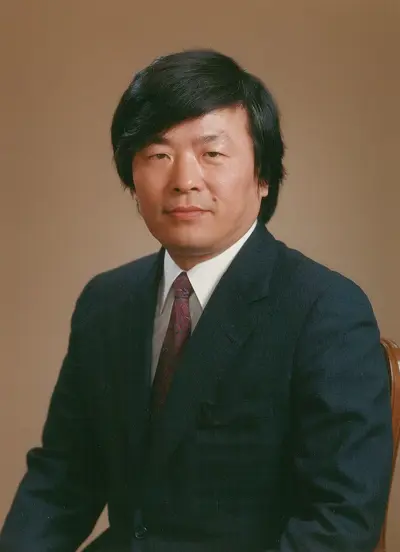
Susumu Tonegawa is a Japanese scientist who was the sole recipient of the Nobel Prize for Physiology or Medicine in 1987, for his discovery of the genetic mechanism that produces antibody diversity. Although he won the Nobel Prize for his work in immunology, Tonegawa is a molecular biologist by training and he again changed fields following his Nobel Prize win; he now studies neuroscience, examining the molecular, cellular and neuronal basis of memory formation and retrieval.
