Tom Stoppard Quotes
My family was in Singapore when the Japanese War started. We were in Singapore at the time of Pearl Harbor, and by the beginning of 1942, the Japanese invasion of Burma and Singapore had started.
Stoppard, Tom. Tom Stoppard in Conversation. Edited by Paul Delaney, University of Michigan Press, 1994.


After the sneak attack on Pearl Harbor, Stimson drafted the Declaration of War that President Roosevelt would ask Congress to vote for. However, there was a small but very vocal group of extreme Republican conservatives who opposed assisting England against Hitler and saw German and Italian Fascism as positive forces. They would oppose any administration declaration of war against Germany and Italy who had not yet attacked any American facilities. The President realized that German and Italy had a Mutual Defense Treaty with Japan, and when we declared war against Japan, would have to ally with Japan or reneg on their treaty. So FDR removed Germany and Italy from the Declaration and Congress just declared war against Germany. In the next days, Germany and Italy declared war against the United States, and the de facto situation was as Stimson had drafted it, but FDR had not given the right wing American Fascist sympathizers any issue to criticize the administration.


The general was replacing George S. Patton as commander of the Third Army. Patton had opposed the deNazification policy of the allies and caused a great deal of public relations difficulty for the army command and the administration, as reporters would frequently print his views. Truscott was one of Patton’s loyal assistants. The minute he took over, the press wanted to find out if his views were the same as his former boss regarding the Nazis. They were quite different. Reporters had no story.


This quotation is important because the American public and their leaders saw only one course of action—invasion of the Japanese Mainland. The debate was whether to attempt the invasion right away or bomb and blockade Japan into destruction and starvation weakening the population so their resistance would not produce the kind of casualties that we had experienced with the Invasion of Okinawa. The bombing and blockade strategy was selected and 80 percent of Tokyo was obliterated. Yet the Japanese refused to surrender even after all its manufacturing capability was destroyed and the agriculture was beginning to be destroyed. Most Americans did not realize it but the atomic bomb was being made ready for use. After the test bomb in New Mexico, we had enough fissionable material for 2 bombs and it would take several months for each additional bomb. The use of the atomic bomb at the time seemed not much different from the massive bombing that had already taken place. More Japanese were killed in some of these conventional bombings than with the Atomic Bomb. The key believe was that the Japanese would not give up. After the first A bomb, they still would not surrender, and when the Emperor decided on surrender after the 2nd bomb, there was a military insurrection in the palace to stop the Emperor’s surrender message to the people from being broadcast. It was just minutes too late, and the Emperor had to be obeyed. Invasion, with its terrible casualties—many more than the atomic bombs—was unnecessary.

Note that he assumes that not only will there be another World War, but he assumes that we will be on opposite sides.


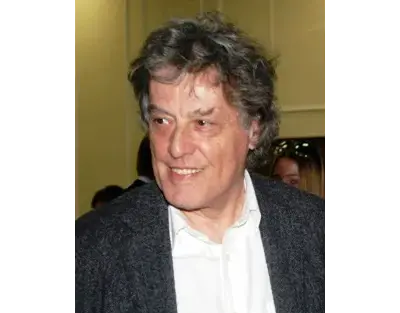
Sir Tom Stoppard OM CBE FRSL HonFBA is a Czech-born British playwright and screenwriter. He has written for television, radio, film, and stage, finding prominence with plays such as Arcadia, The Coast of Utopia, Every Good Boy Deserves Favour, Professional Foul, The Real Thing, Travesties, The Invention of Love, and Rosencrantz and Guildenstern Are Dead.
