Gad Saad Quotes
My family and I were welcomed to Canada more than 40 years ago. We sought and obtained refuge in a liberal, modern, and secular society, and put the ugliness of genocidal religious hate and associated tribalism behind us - or so we thought.
Saad, Gad. The Parasitic Mind: How Infectious Ideas Are Killing Common Sense, Regnery Publishing, 2020.


The Ottoman Empire was a word Superpower for over 1,000 years, longer than any other in history, One of its great strengths was its pluralism and ability to not only absorb and assimilate people from other nations, cultures and religions, but also to utilize those people in key positions and contributions to their society. Christians and Jews rose to the highest positions under the Sultans. They became Governor’s of Provinces, manages of departments and even Grand Vizier to the Sultan himself. Jewish and Christian physicians, attorneys, traders were all valued in the Empire even though the had a second class status relative to Muslims. The opportunity was always there to convert to Islam and many did, but many did not and thrived, The Ottomans saw Christian Europe, not only in continuous religious conflict, but individual nations were never able to use the talents of the religious minority, the way that the Ottomans did, and later the United States did. Not only did the Ottomans allow immigrants from all over the world to become part of the Empire Government or Economy, but they actually send agents throughout the empire to find the best and the brightest of young men—regardless of religion or nationality—and bring them to the Sultan’s court for education, training and service. IT should be noted however, that the motivation was in no way moral or a desire for fairness. It was totally pragmatic. Exceptional manpower was not to be wasted.
Most immigration reformers want to open immigration more widely. Ward wanted immigration restricted to certain ethnicities and limited. Essentially, this was code for anti-Catholicism and anti-Semitism. The immigrants that he described as not being “helpful” have made some of the greatest contributions to America. One element of the immigration debate that is illustrated by this quotation is whether the United State should be homogeneous or heterogeneous. It has been the latter and that has brought the best of cultures of the world to the United States which has constantly been shaped by its immigrants even as it shaped and assimilated the immigrants.


What is facinating is that the same issue was raised by the 11th Century Muslims of the Middle East about allowing white Christians into their lands, Europe had gone throught the Dark Ages and enering into the Middle Ages where Chrsitian Contributions to civilization were minimal, while the Muslims were inventing algebra, astronomy, art, architecture, poetry, and exceleld in medicine. The few Christian scholars studied in Muslim lands if they could. King reveals his own ignorance by such a statement. He never realzied that the Mexican Artist Diego Rivera was not only a great congtributor to the world of art, but to this day major buildings in the United States including LaGuardia Airpoirt display his great murals. Nobel laureates in Literature were many from Hispanic America. That the state of the art of the medical field of plastic surgery has been centered in Brazil for a number of years, how Muslim Nations like Turkey allowed women to vote before teh United States did, and the great conductor of the Los Angeles Philharmonic Orchestra is a man from Venesuela. There are thousands of counterexamples to Smith's implication in his question.

He was agreeing with the Right Wing racist Dutch politician Geert Wilders that one of the dangers of immigration of different races and ethnicities is that their children would not be capable or able to contribute to America or in his view make America Great Again as it has been diminished by all these immiogrant babies of the last few generations. There are very few areas of civilization where America is not greater today than ever before.


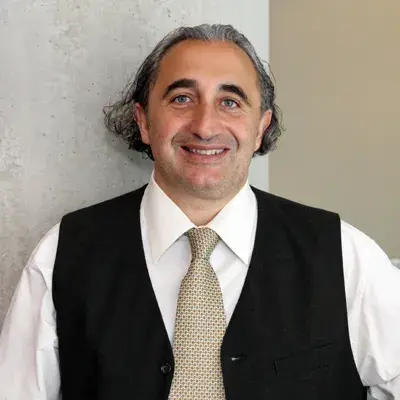
Gad Saad is a Lebanese-Canadian evolutionary psychologist and professor in the John Molson School of Business at Concordia University who is known for applying evolutionary psychology to marketing and consumer behaviour. He also writes a blog for Psychology Today, and hosts a YouTube channel titled "The Saad Truth".
