Dee Rees Quotes
My dad was a cop, you know, and I grew up three houses down from people who used Confederate flags as curtains.
Anderson, Tre'vell. "Dee Rees on the 'Pathologically Violent' History of America in 'Mudbound'." Los Angeles Times, 17 Nov. 2017.


The Georgia flag with the Confederate flag inset was adopted by the legislature in 1956 during the civil rights struggle. The Governor called for legislation bringing back the old flag.


The President was referring to the Confederate battle flag that flew over the South Carolina Capital while a majority of the State thought it should be removed to a different location.

Criticizing the Southern FBI agents for not enforcing Civil Rights Laws and protecting Blacks:

Most social and demographic changes many people fear will continue on a trend and assume the extrapolation will become reality. Few ever do, and the fears turn out to be just fears.

In his effort to rid the University of the vestiges of racism from the school’s disgraceful segregation riots of the 1960s, he found that the emotional reaction and the anger that developed over symbols was much greater than that which was the result of substantive changes. The Confederate Flag made Blacks and some whites very angry that it was flown and exhibited in many places at the university. It was an insult to Blacks as it extolled not only slavery but an entire rebellion to keep them in subhuman conditions. Some whites saw it as symbols of treason and disloyalty to the United States which should not be celebrated at a state university. At the same time, whites saw the Chancellor’s efforts to diminish the exhibiting of the Confederate flag as an insult to their ancestors, and the values of many Americans and an infringement on their freedom of expression.


Instead of standing and saluting as professional athletes have done for decades before games, he kneeled and refused to stand. This caused great public criticism but also some initial support. He was potentially risking his multimillion dollar salary as this technically violated his contract to avoid anything embarrassing to the team. He also donated $1 million to programs in the area that were working to enhance Black/white understanding. Even those who disagreed with his choice of protest defended his right to do so, and after the initial furor, public opinion, while not in agreement about his method, tended to support him for having the courage of his convictions and using his celebrity for a worthy cause. After sensing the public opinion, his team matches his $1 donation. Professional athletes both in the NFL and in other sports then began to do the same as a form of protest for the large, disproportionate, number of black men who were killed, mostly when unarmed, by police. The reference to the “paid leave” was the practice followed by most police departments—usually required by collective bargaining agreements with police unions—of placing police officers accused of committing violations of laws or regulations on paid administrative leave while all the investigations, hearings, and other processes . While this practice protected the rights of those police officers who were not guilty, it ended up paying brutal murders for a some time entire their case was decided or acted upon be the district attorney.


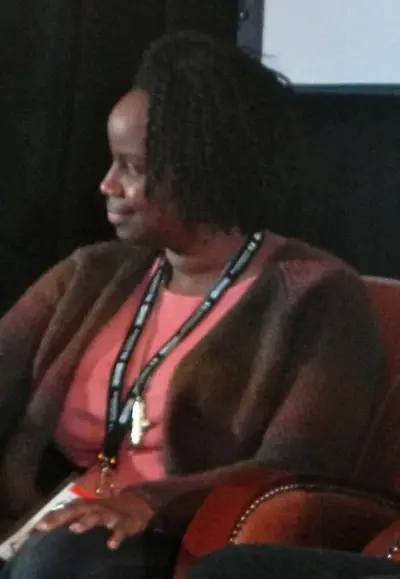
Diandrea Rees is an American screenwriter and director. She is known for her feature films Pariah (2011), Bessie (2015), Mudbound (2017), and The Last Thing He Wanted (2020). Rees has also written and directed episodes for television series including Empire, When We Rise, and Philip K. Dick's Electric Dreams.
