Avicenna Quotes
Mountains have been formed by one [or other] of the causes of the formation of stone, most probably from agglutinative clay which slowly dried and petrified during ages of which we have no record. It seems likely that this habitable world was in former days uninhabitable and, indeed, submerged beneath the ocean. Then, becoming exposed little by little, it petrified in the course of ages.
Avicenna. De Congelatione et Conglutinatione Lapidum. Translated by E. J. Holmyard and D. C. Mandeville, Librairie Orientaliste Paul Geuthner, 1927, p. 18.


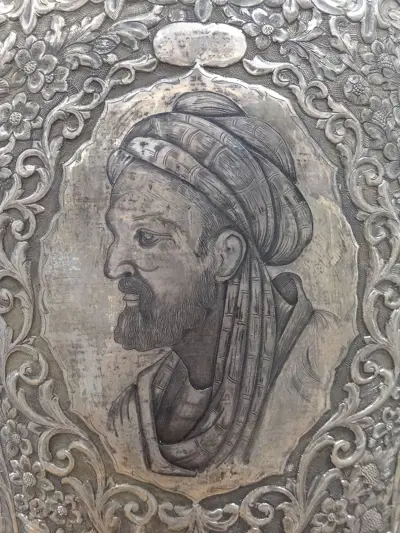
Ibn Sina, also known as Abu Ali Sina, Pur Sina, and often known in the West as Avicenna, was a Persian polymath who is regarded as one of the most significant physicians, astronomers, thinkers and writers of the Islamic Golden Age, and the father of early modern medicine. Sajjad H. Rizvi has called Avicenna "arguably the most influential philosopher of the pre-modern era". He was a Muslim Peripatetic philosopher influenced by Greek Aristotelian philosophy. Of the 450 works he is believed to have written, around 240 have survived, including 150 on philosophy and 40 on medicine.
