Lawrence B. Lindsey Quotes
Most politicians want to be seen as leading the parade. Thus they act to make a good thing better, and when markets slip, they find ways to limit the economic freedom of others.
Lawrence B. Lindsey, Governor, U. S. Federal Reserve Bank (Republican), “Control Freaks,” National Review, November 9, 1998
Sourced by: Eigen's Political and Historical Quotations


The Stock Market went up slightly as a result of his efforts.


If the economy is strong voters will often ignore of forgive leadership failures. But not in a poor economy.

The prime minister had a political and philosophical position that government should not interfere with or set or control pricing in the economy. However, a scandal broke out involving payday lending—short term lending the working class does to tide them over till pay day if they run out of money. Lenders were charging huge interest rates beyond anything that is conscionable. Cameron’s government placed controls on interest rates and other facets of that industry as they might have lost a vote of confidence in Parliament had they not acted. He was then questioned about the hypocrisy involved in his regulation, and he gave this amazing quotation, which was the classic reason for government price controls on the private sector that had been given by the Labor Party opponents for years. This also distressed extreme conservatives, who argue that market controls are always preferable to government controls.


This may have been the worst stock market advice ever sent to customers. The Great Depression would suppress the economy of more than a decade.

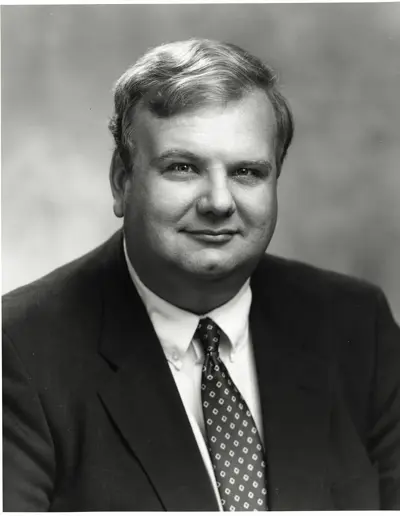
Lawrence B. "Larry" Lindsey is an American economist. He was director of the National Economic Council (2001–2002), and the assistant to the president on economic policy for the U.S. President George W. Bush. He played a leading role in formulating President Bush's $1.35 trillion tax cut plan, convincing candidate Bush that he needed an "insurance policy" against an economic turndown. He left the White House in December 2002 and was replaced by Stephen Friedman after a dispute over the projected cost of the Iraq War. Lindsey estimated the cost of the Iraq War could reach $200 billion, while Defense Secretary Donald Rumsfeld estimated that it would cost less than $50 billion.
