Samuel Richardson Quotes
Men generally are afraid of a wife who has more understanding than themselves.
Richardson, Samuel. A Collection of the Moral and Instructive Sentiments, Maxims, Cautions, and Reflexions, Contained in the Histories of Pamela, Clarissa, and Sir Charles Grandison. S. Richardson, 1755.


Even though a strong feminist, note the Victorian concept of sex—namely that it is the man who does the seduction and the woman who is the passive victim. Also that the act of sex has somehow damaged a woman so that she needs “maintenance”. Modern feminists and non feminists, and our laws and culture, no longer look at sex as damage to a woman so the seduction, regardless of whether the male or the female is the seducer, is not a problem that needs compensation. It is only if children result, that there is male responsibility—not for the seduction but for taking his share of the responsibility for creating another human being that needs support. Also, most modern cultures do not see all sex as a seduction of one party be another—sex can be and often is the joint decision of consenting adults. In some cases females seduce males.


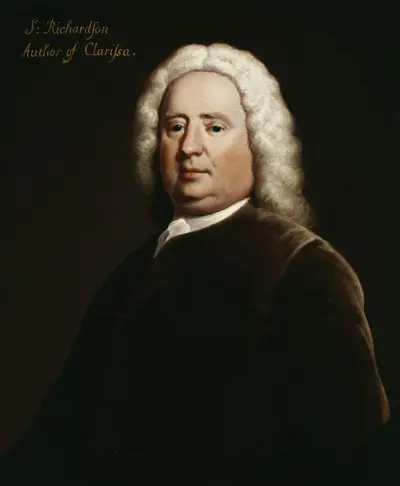
Samuel Richardson was an English writer and printer best known for three epistolary novels: Pamela; or, Virtue Rewarded (1740), Clarissa: Or the History of a Young Lady (1748) and The History of Sir Charles Grandison (1753). He printed almost 500 works during his life, including journals and magazines, working periodically with the London bookseller Andrew Millar. Richardson had been apprenticed to a printer, whose daughter he eventually married. He lost her along with five sons, but remarried and had four daughters who reached adulthood, but no male heirs to continue the print shop. As it ran down, he wrote his first novel at the age of 51 and immediately joined the popular, admired writers of his day. Leading figures he knew included Samuel Johnson and Sarah Fielding, and the eminent physician and Behmenist George Cheyne and the theologian and writer William Law, whose books he printed. At Law's request, Richardson printed some poems by John Byrom. In the literary world he rivalled Henry Fielding, and the two responded to each other's literary styles.
