Avicenna Quotes
Medicine deals with the states of health and disease in the human body. It is a truism of philosophy that a complete knowledge of a thing can only be obtained by elucidating its causes and antecedents, provided, of course, such causes exist. In medicine it is, therefore, necessary that causes of both health and disease should be determined.
Avicenna. The General Principles of Avicenna's Canon of Medicine. Translated by Mazhar H. Shah, Naveed Clinic, 1966, p. 17.

This quotation is one of the most amazing of its era. In addition to establishing the importance of study of the human body itself, and the importance of empiricism, but it is one of the first declarations of the importance of prevention in the health arena.

This was a time when the church and establishment only recognized the Bible and the views of the authorities as a means of knowing and validating knowledge. By appealing to the individual’s own judgment and empiricism he was far ahead of his time. See {586127}.


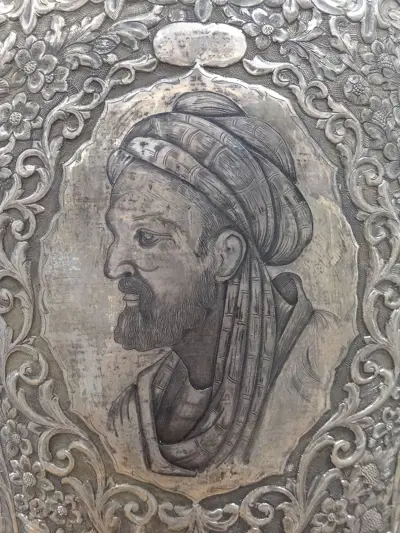
Ibn Sina, also known as Abu Ali Sina, Pur Sina, and often known in the West as Avicenna, was a Persian polymath who is regarded as one of the most significant physicians, astronomers, thinkers and writers of the Islamic Golden Age, and the father of early modern medicine. Sajjad H. Rizvi has called Avicenna "arguably the most influential philosopher of the pre-modern era". He was a Muslim Peripatetic philosopher influenced by Greek Aristotelian philosophy. Of the 450 works he is believed to have written, around 240 have survived, including 150 on philosophy and 40 on medicine.
