Sargent Shriver Quotes
Maximum Feasible Participation of the Poor
There are those who claim that the principle was created by other staff of Shriver’s Office of Economic Opportunity. However, there is little consensus about this. There is no doubt that Shriver, as the Director of the Program, signed the papers and made the speeches implementing it. Ironically, this was the most unpopular aspect of the Poverty Program with all other elements of society. The principle of this motto was first espoused in the middle of the 17th century by Gerrard Winstanley, the leader of the English Digger Movement. See for example {616965}.
Sargent Shriver, Director, Office of Economic Opportunity, Democratic Candidate for Vice President of the United States, Operating Principle & Slogan of the Community Action component of the War on Poverty, 1964
Sourced by: Eigen's Political and Historical Quotations

The Diggers were a religious-economic movement that even today would be considered very radical. They advocated the right of the poor to go onto public lands and farm them—thus the name “Diggers.” Beyond their opposition to the private ownership of land to the exclusion of the poor, Winstanley and the Diggers promulgated another very modern doctrine: That the poor should take the responsibility and have the right to determine how the society should provide for the poor. A version of this became one of the Mottos of the Poverty Program of 1964. See {616966}.
The Diggers were a religious-economic movement that even today would be considered very radical. They advocated the right of the poor to go onto public lands and farm them—thus the name “Diggers.” Beyond their opposition to the private ownership of land to the exclusion of the poor, Winstanley and the Diggers promulgated another very modern doctrine: That the poor should take the responsibility and have the right to determinine how the society should provide for the poor. A version of this became one of the Mottos of the Poverty Program of 1964. See {616966}.
The Diggers were a religious-economic movement that even today would be considered very radical. They advocated the right of the poor to go onto public lands and farm them—thus the name “Diggers.” Beyond their opposition to the private ownership of land to the exclusion of the poor, Winstanley and the Diggers promulgated another very modern doctrine: That the poor should take the responsibility and have the right to determinine how the society should provide for the poor. A version of this became one of the Mottos of the Poverty Program of 1964. See {616966}.
The Diggers were a religious-economic movement that even today would be considered very radical. They advocated the right of the poor to go onto public lands and farm them—thus the name “Diggers.” Beyond their opposition to the private ownership of land to the exclusion of the poor, Winstanley and the Diggers promulgated another very modern doctrine: That the poor should take the responsibility and have the right to determinine how the society should provide for the poor. A version of this became one of the Mottos of the Poverty Program of 1964. See {616966}.
The Diggers were a religious-economic movement that even today would be considered very radical. They advocated the right of the poor to go onto public lands and farm them—thus the name “Diggers.” Beyond their opposition to the private ownership of land to the exclusion of the poor, Winstanley and the Diggers promulgated another very modern doctrine: That the poor should take the responsibility and have the right to determinine how the society should provide for the poor. A version of this became one of the Mottos of the Poverty Program of 1964. See {616966}.
The Diggers were a religious-economic movement that even today would be considered very radical. They advocated the right of the poor to go onto public lands and farm them—thus the name “Diggers.” Beyond their opposition to the private ownership of land to the exclusion of the poor, Winstanley and the Diggers promulgated another very modern doctrine: That the poor should take the responsibility and have the right to determinine how the society should provide for the poor. A version of this became one of the Mottos of the Poverty Program of 1964. See {616966}.
The Diggers were a religious-economic movement that even today would be considered very radical. They advocated the right of the poor to go onto public lands and farm them—thus the name “Diggers.” Beyond their opposition to the private ownership of land to the exclusion of the poor, Winstanley and the Diggers promulgated another very modern doctrine: That the poor should take the responsibility and have the right to determinine how the society should provide for the poor. A version of this became one of the Mottos of the Poverty Program of 1964. See {616966}.


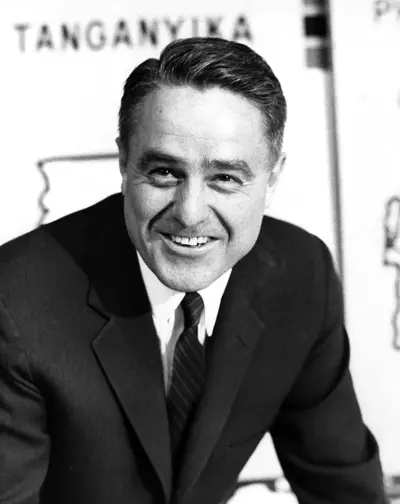
Robert Sargent Shriver Jr. was an American diplomat, politician and activist. As the husband of Eunice Kennedy Shriver, he was part of the Kennedy family. Shriver was the driving force behind the creation of the Peace Corps, and founded the Job Corps, Head Start, VISTA, Upward Bound, and other programs as the architect of the 1960s War on Poverty. He was the Democratic Party's nominee for vice president in the 1972 presidential election.
