Ambrose Bierce Quotes
MALTHUSIAN, adj. Pertaining to Malthus and his doctrines, who believed in artificially limiting population, but found that it could not be done by talking. Herod of Judea, all the famous soldiers have been practical exponents of the Malthusian idea.
Bierce, Ambrose. The Devil's Dictionary. The Neale Publishing Company, 1911, p. 207.


In Burundi, family land is divided among the male children of a family. The average Burundian woman has 6.3 children, nearly triple the international fertility rate. With this fertility rate, the plots of land for each person inevitably get smaller and smaller over time. At 10,745 square miles, Burundi is slightly smaller than the U.S. state of Maryland, but it holds nearly twice as many people: about 10 million. The small plots of land are inefficient to farm and provide subsistence. So the nation was in a crises as there was little industrialization and land was essential for existence for most Burundians. See {35808} and {35809}.


The Clinton Administration decided not to issue the directive. To do so would have embroiled the administration in a huge abortion debate as the NSC has previously observed that no nation has ever reduced its population growth without using abortion as one of the techniques. India, for example, utilized both abortion and sterilization—both offensive to segments of American public opinion.


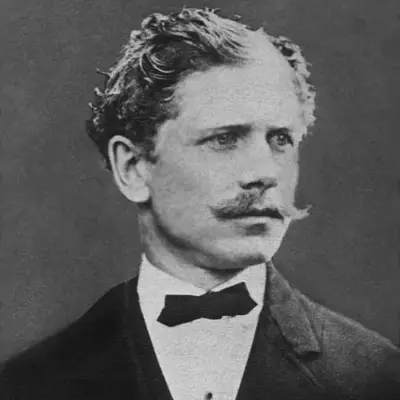
Ambrose Gwinnett Bierce was an American short story writer, journalist, poet, and Civil War veteran. His book The Devil's Dictionary was named as one of "The 100 Greatest Masterpieces of American Literature" by the American Revolution Bicentennial Administration. His story "An Occurrence at Owl Creek Bridge" has been described as "one of the most famous and frequently anthologized stories in American literature"; and his book Tales of Soldiers and Civilians (also published as In the Midst of Life) was named by the Grolier Club as one of the 100 most influential American books printed before 1900.
