Sylvia Plath Quotes
Let's face it: I'm scared, scared and frozen. First, I guess, I'm afraid for myself ... the old primitive urge for survival. It's getting so I live every moment with terrible intensity. Last night, driving back from Boston, I lay back in the car and let the colored lights come at me, the music from the radio, the reflection of the guy driving. It all flowed over me with a screaming ache of pain ... remember, remember, this is now, and now, and now. Live it, feel it, cling to it. I want to become acutely aware of all I've taken for granted. When you feel that this may be the good-bye, the last time, it hits you harder.
Plath, Sylvia. The Unabridged Journals of Sylvia Plath. Edited by Karen V. Kukil, Anchor Books, 2000.

He was later assassinated.


The fear of nuclear war was a major emotion for most people in the world at the time. Hard liners like Goldwater were concerned that that fear would undermine support for greater nuclear development and deployment in America and maintaining opposition to nuclear test ban treaties that were under discussion. He made the mistake however of referring to the fear as “craven”, morally denigrating any American who might be in fear of nuclear war, which included just about everyone. So the Democrats took this quotation and used it in their battery of TV ads showing Goldwater as not only a hard liner, but one who had no empathy or understanding for a normal person who feared a nuclear conflict—one who was not to be trusted with the Presidency. Had Goldwater simply argued that legitimate and reasonable fear of nuclear conflict might make the nation too timid and perhaps inadvertently increase the likelihood of nuclear disaster by not standing up to the Russians, he may not have had the resentment from most people who thought Goldwater was calling their fears “craven”.


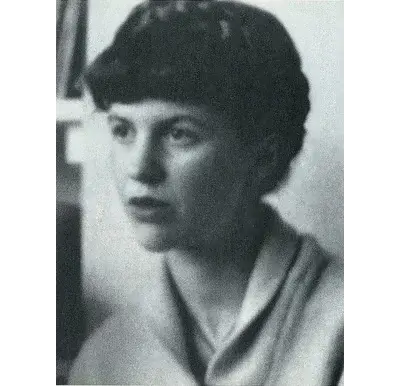
Sylvia Plath was an American poet, novelist, and short-story writer. She is credited with advancing the genre of confessional poetry and is best known for two of her published collections, The Colossus and Other Poems (1960) and Ariel (1965), as well as The Bell Jar, a semi-autobiographical novel published shortly before her death in 1963. The Collected Poems were published in 1981, which included many previously unpublished works. For this collection Plath was awarded a Pulitzer Prize in Poetry in 1982, making her the fourth to receive this honour posthumously.
