Winston Churchill Quotes
Lenin was sent into Russia by the Germans in the same way that you might send a phial containing a culture of typhoid or cholera to be poured into the water supply of a great city, and it worked with amazing accuracy.
Churchill, Winston. The World Crisis, Volume 5: The Aftermath. Thornton Butterworth, 1929, p. 73.


at the end of World War I 1st Earl Lloyd-George of Dwyfor


Ransome had a unique access to Post Russian Revolutionary leadership as his fiancée was the secretary to key Russian Communist party committees and through her he had access to Lenin, Trotsky and other leaders. In general Ramsome is best known as a children’s book author.
Ransome had a unique access to Post Russian Revolutionary leadership as his fiancée was the secretary to key Russian Communist party committees and through her he had access to Lenin, Trotsky and other leaders. In general Ramsome is best known as a children’s book author.

Lenin, Uritsky, and other Bolshevik leaders were attacked in 1918. Lenin was wounded but Utrtsky died, and this triggered the attacks on the other Russian factions by the Bolsheviks known as the “Red Terror.”


Although he was a Marxist, he was also a democrat. He was one of the first leftists to criticize the Russian Revolution. The letter was widely published. There were few left wing intellectuals who would take Lenin on at the time but Gorter was one.


Official `Russian Communist Party Publication. There was no way that the farming peasants could get money for their crops. They had to turn over most to the government to feed the cities. But without money, the peasants could not get the goods manufactured in the cities and there was little motivation for the peasants to farm.


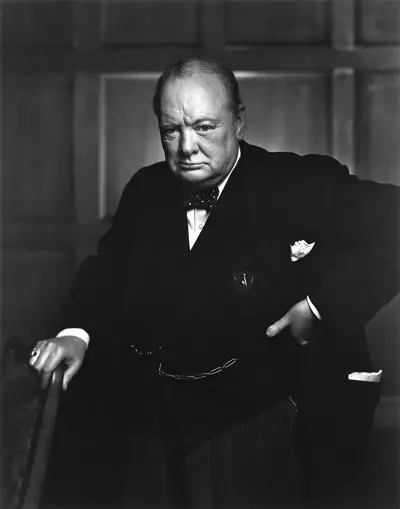
Sir Winston Leonard Spencer Churchill, KG, OM, CH, TD, DL, FRS, RA was the Prime Minister of the United Kingdom from 1940 to 1945, during the Second World War, and again from 1951 to 1955. Apart from two years between 1922 and 1924, Churchill was a Member of Parliament (MP) from 1900 to 1964 and represented a total of five constituencies. Ideologically an economic liberal and imperialist, he was for most of his career a member of the Conservative Party, as leader from 1940 to 1955. He was a member of the Liberal Party from 1904 to 1924. Churchill was also well known for his military career and as a historian, painter and writer, and among his many awards was the Nobel Prize in Literature.
