Vladimir Lenin Quotes
... knew more about world politics than all the cabinet ministers in office.
Assessing Homer Lea, 1876-1912, the American Mercenary and Political Advisor to China: Vladimir Lenin
Nikolai Lenin, 1870-1924, Russian Communist Premier, Quoted in Tom Alexander, "Ambitious Little Romancer—or Visionary Genius, Smithsonian, July 1993
Sourced by: Eigen's Political and Historical Quotations


Roosevelt promoted Eisenhower over more than 300 more senior generals and put him in charge of the American Forces invading North Africa—the first American combat in the war. In addition to commanding the American forces, he was also responsible for dealing with many leading politicians from Winston Churchill to the very difficult French General Charles De Gaulle. That is why Eisenhower was picked, and a brilliant pick it was.

The senator was participating in a televised hearing on nightclub and restaurant taxes, during which the expensive and famous 21 Club was discussed. The senator referred to it as the "22 Club" and the "23 Club." A friend asked him about his errors recalling that they had dined together at the 21 Club many times:


Turkey with the decline of the Ottoman Empire, had little experience in modern international politics—and no modern leaders until Ataturk came and modernized the nation. The Turks had allied themselves with Germany in WWI and in the aftermath came out as badly in the peace as they had in the war.


The phrase “short strokes” is a metaphor from the rowing racing tactic of as the finish line is approached, the boat maximizes speed by the rowers making shorter stokes, but at a much faster rate.


In the political debate about the Start Disarmament Treaty, Sara Palin, who had no experience of any kind with weapons or treaties of any kind, made a public statement that made little sense given the complex natures of the serious discussion that was ongoing.


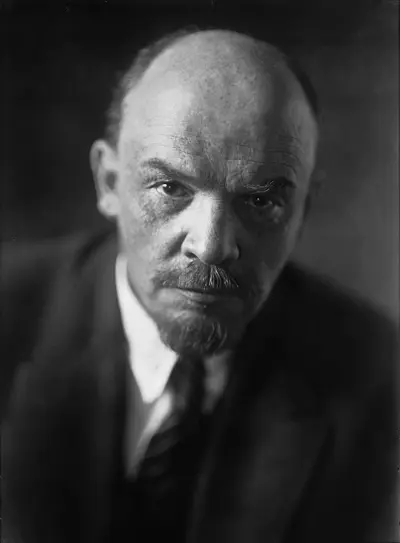
Vladimir Ilyich Ulyanov, better known by his alias Lenin, was a Russian revolutionary, politician, and political theorist. He served as the first and founding head of government of Soviet Russia from 1917 to 1924 and of the Soviet Union from 1922 to 1924. Under his administration, Russia, and later the Soviet Union, became a one-party socialist state governed by the Soviet Communist Party. A Marxist, he developed a variant of this communist ideology known as Leninism.
