Aeschylus Quotes
Justice, voiceless, unseen, seeth thee when thou sleepest and when thou goest forth and when thou liest down. Continually doth she attend thee, now aslant thy course, now at a later time. These lines are from a section of doubtful or spurious fragments.
Aeschylus. Fragment 262 (Spurious). Aeschylus: Agamemnon, Libation-Bearers, Eumenides, Fragments. Translated by Herbert Weir Smyth, Harvard University Press, 1926, p. 509.


Moses urged them not to accept a compromise what would give them the majority of everything that they were demanding but not all. See {637624} for Rustin’s’ argument to accept the compromise.


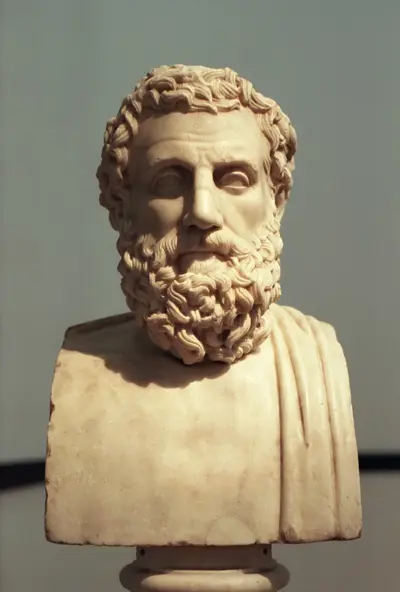
Aeschylus (UK: /ˈiːskɪləs/, US: /ˈɛskɪləs/; Greek: Αἰσχύλος Aiskhylos, pronounced [ai̯s.kʰý.los]; c. 525/524 – c. 456/455 BC) was an ancient Greek author of Greek tragedy, and is often described as the father of tragedy. Academics' knowledge of the genre begins with his work, and understanding of earlier Greek tragedy is largely based on inferences made from reading his surviving plays. According to Aristotle, he expanded the number of characters in the theatre and allowed conflict among them. Before this, characters interacted only with the chorus.
