Learned Hand Quotes
Justice is the tolerable accommodation of the conflicting interests of society, and I don't believe there is any royal road to attain such accommodation concretely
Learned Hand, 1872-1961, Federal Judge, Quoted in P. Hamburger, The Great Judge, 1946
Sourced by: Eigen's Political and Historical Quotations


For an earlier expression of this notion see James Madison.


Jacques Anatole Francois Thibault


For a later variation of this idea see Stanislaw Lec {608869}. Ingersoll was considered to be the greatest orator and political thinker of his day, but his overt atheistic views curtailed his elected political career.


Sharansky argued that Democracy had to come to the Arab nations in order to have peace. Buchanan tended to support many who would do Jews harm or had killed many Jews such as Nazi Concentration Camp gueards who were anti-Semitic, but he always claimed not to be anti-Semitic himself.

Tojo objected to his being tried for war crimes by the victor’s moral standards as opposed to one that would be universally agreed to. Many of the Japanese as many of the German war criminals believed that their actions were appropriate and not crimes at all. That is the difficulty when a regime comes to power with its own standards of morality and then wages aggressive war and imposes it upon others.


There are many democracies that have run into this problem at many times. Even the United States had situations like this. The Adams-Jefferson Presidential Contest caused President Adams to curtail civil rights so he could not be as viciously attacked. The polarization after the first Black was elected president in 2008 was another period of destructive contention and polarization.
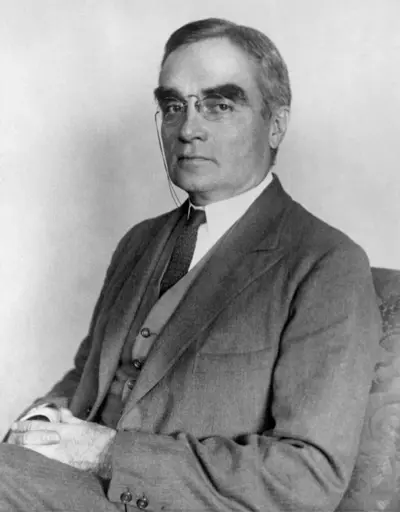
Billings Learned Hand was an American judge and judicial philosopher. He served on the United States District Court for the Southern District of New York and later the United States Court of Appeals for the Second Circuit. As of 2004 Hand had been quoted more often by legal scholars and by the Supreme Court of the United States than any other lower-court judge.
