Leonardo da Vinci Quotes
Just as courage imperils life, fear protects it.
Da Vinci, Leonardo. The Literary Works of Leonardo da Vinci. Translated by Jean Paul Richter, vol. 2, Sampson Low, Marston, Searle & Rivington, 1883, p. 110.


Proenza was giving an explanation of why he had “blown the whistle” on the Department of Commerce over the QuickScat weather satellite. QuickScat, was the satellite that the Hurricane Center used to give early warnings about hurricanes and other tropical storms. However in 2007 it was still in service although it was only designed for a shorter period than it had already been functioning. Proenza and other scientists at NOAA reported that the satellite could fail at any time and leave the nation without an equivalent predictive tool. There had been a government plan to replace the satellite with a new one, but the cost was $400 million, but the Bush Administration had cut taxes massively and had gone from the Clinton budget surplus to the largest deficit then in American history. The administration told all senior officials that they should not tell Congress or the public that they needed any more money. When Proenza went public because he thought that people could easily die for lack of predictive capability of hurricanes, the George W, Bush administration suspended him for speaking out and not being loyal to the President and his administration. His loyalty was to the lives and safety of the American people and not to any politicians.


There was violence but ironically in the bombing of the 16th Street Baptist Church, it was not the civil rights leaders who were murdered but 4 little girls.


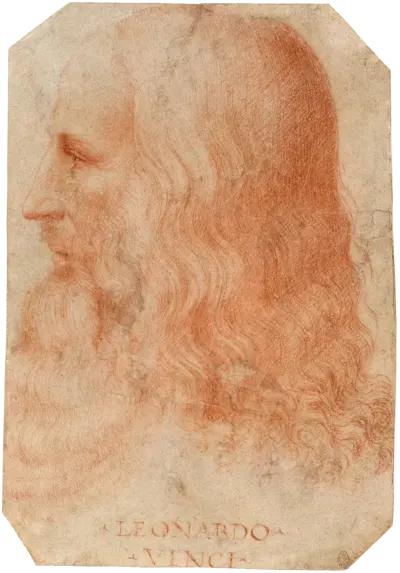
Leonardo da Vinci was an Italian polymath of the High Renaissance who was active as a painter, draughtsman, theorist, engineer, scientist, sculptor and architect. While his fame initially rested on his achievements as a painter, he also became known for his notebooks, in which he made drawings and notes on a variety of subjects, including anatomy, astronomy, botany, cartography, painting, and paleontology. Leonardo's genius epitomized the Renaissance humanist ideal, and his collective works compose a contribution to later generations of artists rivaled only by that of his younger contemporary and fellow founder of the High Renaissance, Michelangelo.
