Pardis Sabeti Quotes
It’s a really exciting moment when you know something about the whole world that nobody else does.
See related quote for another scientist with a first discovery.
Pardis Sabeti, Genetic Biologist, Description of the feeling when she made a unique scientific discovery, Quoted in Smithsonian, December 2012
Sourced by: Eigen's Political and Historical Quotations

Dr. Snyder was the youngest physicist at Los Alamos working on the Atom Bomb Manhattan Project. James Alfred Van Allen (1914–2006) had theoretically predicted that there was a “belt” of small rocks and pebbles around the solar system in a particular orbit but his hypothesis could not be confirmed because the rocks of the belt would be too small to be detected by the telescopes and sensors of the time. Snyder, at the Jet Propulsion Laboratory, was the head of a team that launched a rocket into the stratosphere whose sensors could detect much smaller objects than ever before because there was no interference from the Earth’s atmosphere. The sensor signals were radioed back to Snyder’s computers which produced thousands of pages of wide paper, line printer output which then had to be read and deciphered. Snyder took them home to start the deciphering process. Snyder’s wife Marjorie, had been used to helping with the mathematical process. At 2 AM, with the print outs spread on their living room floor, they “saw” the many small objects exactly where Van Allen predicted they would be. After savoring the fact that they knew something that no one else in the world knew, they called Professor Van Allen who was delighted to be awakened with the news. See related quote for another example of a scientist who made a unique discovery.


This quotation illustrates a difficulty that scientists have in trying to justify public funds in the context of a government program where specific objectives and timetables are wanted by the appropriators and public support needs to be developed.


Second to Benjamin Franklin, Rush was the only other real scientist of the American colonial era.

This is one of the reasons that scientific research pays such large dividends to society.
It is not only the companies of rich nations that equip their people, but also the non-profit sector including the universities.


Bush had advised FDR to go ahead with the research and development program to try and develop an atomic bomb. He was the only Government Official who Roosevelt discussed the idea with. At the time, Bush as a government official supervised and directed many thousands of scientists, and was one of just a few scientists who monitored and advised on the Manhattan Project to develop the Bomb.


This was published just after his death.

Just prior to this quote he said: "[There is a] widespread belief that there is a conflict between science and religion. But this is not true. There may be a conflict between softminded religionists and toughminded scientists, but not between religion and science."


Under this initiative the US declassified and distributed technical, previously secret information, about atomic science to the world for scientific development. It has been very successful and there are few modern nations that have not benefitted from the program.


It was not very long before there was no scientific field any longer in which any human being could learn everything that is known. Sherrington was one of the first to see that coming.


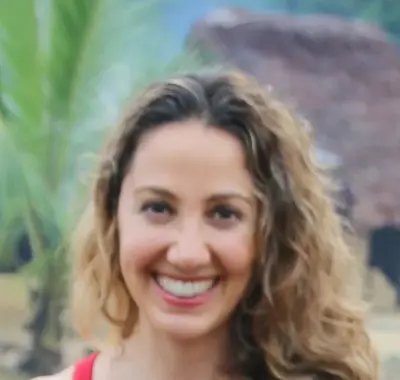
- Born: December 25, 1975
- Nationality: Iranian
- Profession: Scientist
Pardis Christine Sabeti (Persian: پردیس ثابتی) is an Iranian-American computational biologist, medical geneticist and evolutionary geneticist. She developed a bioinformatic statistical method which identifies sections of the genome that have been subject to natural selection and an algorithm which explains the effects of genetics on the evolution of disease.
