Jairam Ramesh Quotes
It was good to launch the economy in the '50s. Japan did this; China did this; even South Korea did this. All the East Asians did this - import substitution. I think all countries followed import substitution in the '50s and in the '60s, but I think by the '70s, countries were getting out of that first phase of the strategy.
Ramesh, Jairam. Interview. Commanding Heights, Public Broadcasting Service, 17 July 2000.


Zhou , Deng and other Chinese senior leaders carefully studied failures of 200th Century Communist nation economies from Russia to North Korea, and observed the successes of not only the United States and Western Europe, but South= Korea and Thailand å well and decided to transform to a capitalist style market and competitive economy. Zhou organized a cruse on which they invited Western economists and political economists to advise on how to make the transformation. Th Chinese took many of the Western ideas, placed them into a Chinese context, added some ideas of their own and proceeded ahead with the largest and most seectaculkar economic transformation and development in World history.


Large financial companies insist on profits at regular intervals and predictability whereas the innovative companies do not do well trying to meet those conditions and spending their time with the large finance company. While large financial companies were important to finance companies on the latter part of the 20th century, it was the smaller finance companies who financed most of the very important start-ups. By the 21st century, companies like Google and Facebook, made their own public stock offerings bypassing the financial industry. Many other smaller companies were financed via crowd sourcing which also bypasses the financial industry. His point is that the large successful companies can get the funds the need for growth without large finance companies. Smaller firms and startups can (and do) obtain funds through small finance firms or direct private investment. The large finance companies not only inhibit innovative growth he warns but they become such a dominant and controlling force that the industry becomes too big to fail, and the failure of a single large finance company could destroy the entire country’s economy. It happened to Island when their largest bank failed, and to the United States in the Meltdown of 2008.


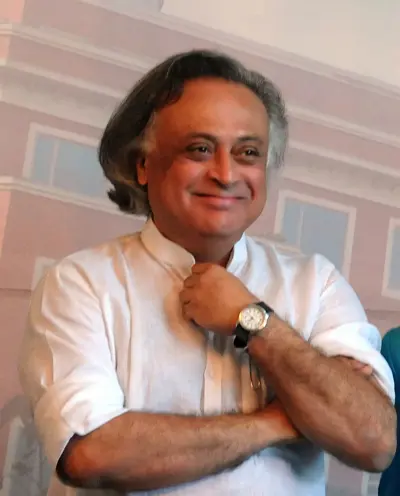
Jairam Ramesh is an Indian economist and politician belonging to Indian National Congress. He is a Member of Parliament representing Karnataka state in the Rajya Sabha. In July 2011, Jairam Ramesh was elevated to the Union Council of Ministers of India and appointed Minister of Rural Development and Minister (additional charge) of the new Ministry of Drinking Water and Sanitation. However, in the cabinet reshuffle in October 2012, he has been divested of the portfolio of Ministry of Drinking Water and Sanitation. He was previously the Indian Minister of State (Independent Charge) at the Ministry of Environment and Forests from May 2009 to July 2011.
