Barbara Ehrenreich Quotes
It was a very big principle in my upbringing that you should respect everybody's work. The street sweeper. Everybody. You should never look down on anybody for their work.
Ehrenreich, Barbara. Nickel and Dimed: On (Not) Getting By in America. Metropolitan Books, 2001.


This was a virtually unheard of idea at the time.


Kern has been censured for her discriminatory and insulting statements made in the legislatures. See {623313} & . {623312} This quotation shows that in a democracy, where legislators represent specific geographic areas, people who are uneducated, racist, homophobic, religiously bigoted and/or foolish can elect a representative who has some bizarre and/or hateful views. There have, in America, always been elected representatives whose views are out of the mainstream and embarrassing to most Americans. However in a free democracy freedom of speech and representation cannot be limited to sensible, constructive, logical or scientifically accurate content. Kern and others like her remind us all where education and public information access may be less than ideal.

This quotation many think is the greatest statement of political equality ever written. Interestingly is also lays an obligation on all people for all others. It was written by a privileged nobleman, a Baron, who was instrumental philosophically and politically in establishing the Batavia Republic in Holland.


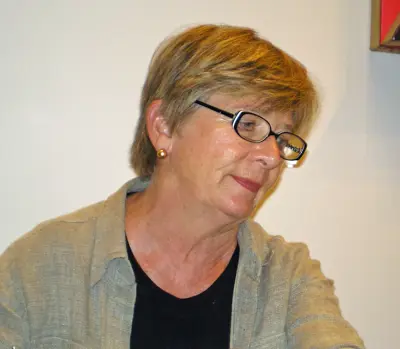
Barbara Ehrenreich is an American author and political activist who describes herself as "a myth buster by trade" and has been called "a veteran muckraker" by The New Yorker. During the 1980s and early 1990s she was a prominent figure in the Democratic Socialists of America. She is a widely read and award-winning columnist and essayist, and author of 21 books. Ehrenreich is perhaps best known for her 2001 book Nickel and Dimed: On (Not) Getting By in America. A memoir of Ehrenreich's three-month experiment surviving on minimum wage as a waitress, hotel maid, house cleaner, nursing-home aide, and Wal-Mart clerk, it was described by Newsweek magazine as "jarring" and "full of riveting grit," and by The New Yorker as an "exposé" putting "human flesh on the bones of such abstractions as 'living wage' and 'affordable housing'." She is a recipient of a Lannan Literary Award.
