Douglas Adams Quotes
It startled him even more when just after he was awarded the Galactic Institute's Prize for Extreme Cleverness he got lynched by a rampaging mob of respectable physicists who had finally realized that the one thing they really couldn't stand was a smart-ass.
Adams, Douglas. The Hitchhiker's Guide to the Galaxy. Pan Books, 1979, p. 74.


Named after penal reformer Johne Howard, 1726-1790. Howard Associations have since been organized in many countries.
Lincoln had instituted the first draft in American History and it was terribly resented by many Americans. The draft laws allowed the wealthy and upper middle class to avoid service by paying a $300 fee of hiring a substitute just like in the Vietnam War the upper classes could get College Draft deferments. The mob led mostly by poor Irish, began by protesting the draft; then they attacked the mansions and houses of the wealthy; and then they went after Blacks. The Irish poor feared large numbers of Negroes coming out of slavery and competing for their jobs and lowering the prevailing wages. Blacks were beaten and lynched and 5,000 almost half of the then Negro population were driven to Brooklyn, New Jersey and the New York suburbs. It was the worst riot in United States History.

The “remarks” were complaints to the legal authorities that her husband had been just lynched. The language of AP describing the event of the late 19th century was all the more remarkable since Ms. Turner was 8 months pregnant. She was hung upside down, and while still alive her belly was slit open. When the baby fell out and started to cry, one of the Valdosta citizens crushed its head with his boot heel. Then they doused her with gasoline and burned her alive. The mob then fired hundreds of shots into Turner's body. This quotation shows how even the national Associated Press syndicate felt it had to report a lynching, torture, infanticide amd murder without any moral or ethical commentary as if they were reporting a drought or an auto accident. The domination of Jim Crowe attitudes in the South and even parts of the North surpressed serious journalism regarding lynchings until Ida Wells {624106} made the breakthrough.


See {623774} for a poem he wrote in Arabic about the battle itself. He had written books in Arabic about Hebrew grammar and language and was the first person to use the Arabic poetic style with its meter and rhyming and used it for writing Hebrew poetry. This poem was so written.


Samuel Langhorne Clemens, 1835-1910

For years through the Jim Crow years, Whites murdered many Blacks with impunity if they were perceived to be uppity or to try and obtain their Constitutionally Protected rights. Most took place in the South. The Negroes were typically tortured, mutilated, burned and hung from trees where they would be left for days as the major purpose was to strike terror in the Southern Black population. The Southern State and local governments never opposed the policy via oratory, legislation of law enforcement. The Federal Government did not interfere either. And much of the FBI under J. Edgar Hoover actually enabled the White Citizen’s Councils and the Klu Klux Klan. The NAACP began an anti-lynching campaign and Ms. Holiday was a one-woman public exposure campaign centered around this song. The anthem itself was written by a New York City schoolteacher named Abel Meeropol, using the pen name, Lewis Allan. It reached millions of Americans and Holiday fans the world over. To view some of the historical scenes described in the song, see http://withoutsanctuary.org/main.html
_0_thumbnail_47x47.jpg "Statue of Robert Hall in Leicester.")

He was the son of LeRoy Percy a Governor of Mississippi, who was running for that post against James Kimble Vardaman, an unabashed Racist, populist, and hate-monger. (See the related quotes for examples.) He appealed to the worst of the Mississippi. This was his famous description of the crowd that turned out for a Vardaman rally in 1903,

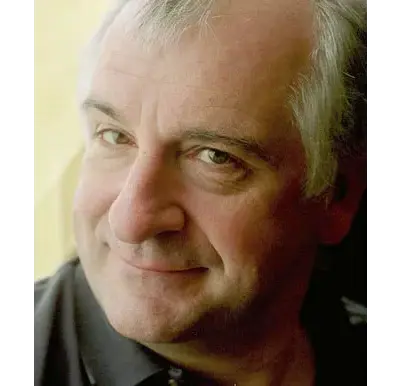
Adams is best known as the author of "The Hitchhiker's Guide to the Galaxy", which originated in 1978 as a BBC radio comedy before developing into a "trilogy" of five books that sold more than 15 million copies in his lifetime and generated a television series, several stage plays, comics, a computer game, and in 2005 a feature film. Adams's contribution to UK radio is commemorated in The Radio Academy's Hall of Fame. Adams was known as an advocate for environmentalism and conservation, as a lover of fast cars, cameras, technological innovation and the Apple Macintosh, and as a "devout atheist".
