Joseph Story Quotes
It should therefore be difficult in a republic to declare war; but not to make peace.
Story, Joseph. Commentaries on the Constitution of the United States. Vol. 3, Hilliard, Gray, and Company, 1833, p. 62.


Podharetz was citing the Vietnam war. The two American occasions where the plausibility seemed to fade were the Vietnam War and The Irag war. Both Presidents Lyndon Baines Johnson and George W. Bush as Bismarck predicted, had much political trouble over the wars.


This is a variant of a famous Clauswitz quotation {635143}.


This is an interesting historical quotation because it shows the role of the Queen in the English Government at the middle of the 19th century. What the quotation shows is that the drafts of significant foreign policies were sent to the young 29 year old Queen for approval. However, her review was not perfunctory, In {630732} it showed how she analyzed proposed policies and pointed out flaws and shortcomings. In this quotation she not only criticized a part of the draft policy but actually wrote her own copy to be included. War was then raging in Lombardy between the Austrians under Marshal Radetzky and the Piedmontese under the King of Sardinia and she believed the Palmerston draft did not do enough to make the Austrians see England as an objective party. And she wanted to be much more proactive and have the British Foreign Ministry mediate the conflict. This would be like a President of the United States taking a draft of a foreign policy from the State Department, instead of either approving or disapproving it, redrafts it to add some additional elements and make the language more comfortable for the parties. And she did this when by U. S. standards she was not old enough to even run for Congress. (And women in the United Kingdom could not even vote.) Note that the formality of the time required that the Queen refer to herself in the third person and not the first.

He had given a speech and then was accused by several representatives He then returned to the podium with this denial. Throughout history many political leaders have started wars to distract the public from the poor economy of other domestic failures. Many others would never do so. All the former, claim that they are the latter.

After the attack on Fort Sumter, the South Sent “diplomats” to negotiation with the Government. Unfortunately for all, the South really was not open to negotiations as they only had two predetermined positions they would agree to: The first was that the Government should guarantee the perpetual right of states to have slavery if they wished and that fugitive slaves would be returned by the non-slave states. The second was that the Union should recognize the Confederacy as an independent nation and have peaceful relations between the two. The first was impossible to deliver even if the Union would agree to continue slavery, there was no way that the Federal Government could enforce the return of fugitive slaves from many northern states where they were free the second they set foot in the state, and the Northern states demanded States Rights and not being forced to return Fugitive Slaves forcing the Southern States to oppose States Rights when it came to Fugitive Slaves while favoring it for slavery itself. The Federal government could not enforce the Dred Scott Decision under the pro-South Buchanan administration. And Lincoln and most of the Northern Politicians would not accept a complete dissolution of the Union. There are no other possibilities the South would accept and there was really nothing to negotiate.

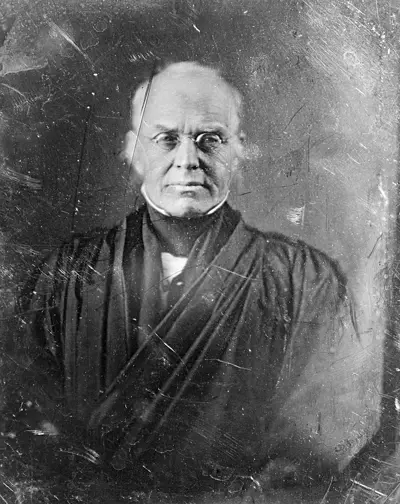
Joseph Story was an American lawyer and jurist who served on the Supreme Court of the United States from 1812 to 1845, during the Marshall Court and early-Taney Court eras. He is most remembered for his opinions in Martin v. Hunter's Lessee and The Amistad case, and especially for his magisterial Commentaries on the Constitution of the United States, first published in 1833. Dominating the field in the 19th century, this work is a cornerstone of early American jurisprudence. It is the second comprehensive treatise on the provisions of the U.S. Constitution and remains a critical source of historical information about the forming of the American republic and the early struggles to define its law.
