Vladimir Lenin Quotes
It should not be imagined that Party organizations must consist solely of professional revolutionaries. We need the most diverse organizations of all types, ranks and shades.
Vladimir Lenin. In this one respect Lenin was far ahead of the capitalist countries. He saw the importance of diversity in the national leadership. At the time, the only governing diversity in America and England, for example, was from which region of the country the White-Anglo-Saxon-Protestants came from. Ironically, under Stalin uniformity of view was so stringently demanded of Party Members, that diversity disappeared in Russia. In the U. S. and England however, various reform forces diversified the political party leadership with which these Democracies thrived.
Nikolai Lenin, 1870-1924, Russian Communist Premier, Speech, Second Party Congress, August 15, 1902
Sourced by: Eigen's Political and Historical Quotations


He was born in the Azerbaijan province of the Soviet Union and did most of his academic work in the United States. He is an example of a globalized scientist.

It is hard to believe that anyone who could write this, would end up running the largest society since the middle ages where total conformity was required with death often accompanying dissent. Yet that is exactly what happened in this great intellectual and philosophical flip flops.


The 2016 election and campaigh was one of the most polarizing in American History, Hate and bigoted groups and individuals supported one of the candidates and some had a predelection towds voilence. Since the election of Abraham Lincoln, Amricans had not been so much at odds. Ironically, the concept of a library itslef produces a liberal institution whose values were at the time contrary to that of many populists who vieed intekkectual efferts as elitist and therfore opposed their existance in the public space.


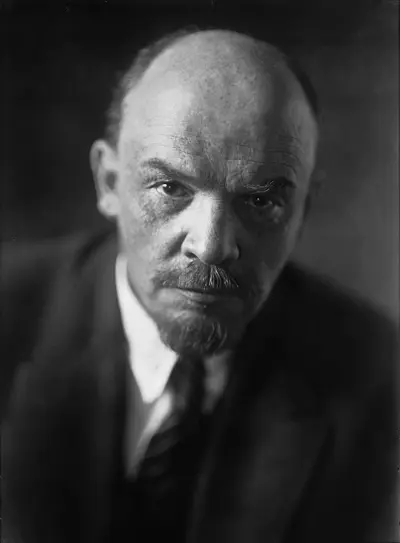
Vladimir Ilyich Ulyanov, better known by his alias Lenin, was a Russian revolutionary, politician, and political theorist. He served as the first and founding head of government of Soviet Russia from 1917 to 1924 and of the Soviet Union from 1922 to 1924. Under his administration, Russia, and later the Soviet Union, became a one-party socialist state governed by the Soviet Communist Party. A Marxist, he developed a variant of this communist ideology known as Leninism.
