Amartya Sen Quotes
It seems to me to be kind of inescapable that one has to be interested in the issue of gender and gender equality. I don’t really expect any credit for going in that direction. It’s the only natural direction to go in. Why is it that some people don’t see that as so patently obvious as it should be?
Sen, Amartya. "Amartya Sen Extended Interview." Wide Angle, PBS, 2 Sept. 2003.


Mrs. Roosevelt thought that with the rate of improvement in society’s perception and treatment of women was improving so steadily that women in America were not far from equality. Because of the shortage of men on the home front in WWII women had performed well in virtually all occupations including welding, heavy construction and management and it was just a matter of time to reach equality of pay and parity. However, she and most feminists did not take into account the 2 million men returning from military service who wanted their jobs back. Sexists, who had been suppressed during the war when they objected to women in non traditional occupations, were no longer silenced by national necessity. An occupational backlash developed. Then a sexual one regarding contraception and family planning, (Condoms for example were illegal up to 1963 as birth control device). Each major step forward was accompanied by its own backlash and even in the Presidential Campaign of 2012 contained debate on women’s control over their own bodies relative to abortion and contraception.


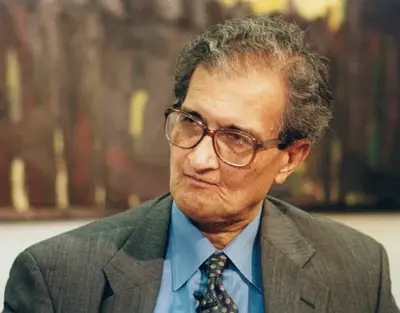
Amartya Kumar Sen CH is an Indian economist and philosopher, who since 1972 has taught and worked in the United Kingdom and the United States. Sen has made contributions to welfare economics, social choice theory, economic and social justice, economic theories of famines, decision theory, development economics, public health, and measures of well-being of countries.
