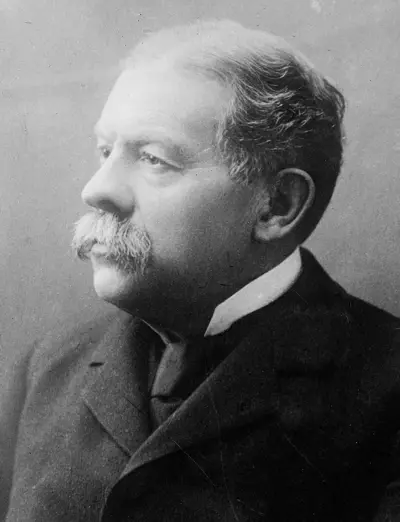
Richard Olney Quotes
It satisfies the public clamor for a government supervision of the railroads at the same time that the supervision is almost entirely nominal.
Richard Olney, 1835–1917, U. S. Secretary of State, U. S. Attorney General, Quoted in Walton & Rakoff, History of the American Economy
Sourced by: Eigen's Political and Historical Quotations


Much reservation land was by law and policy divided amongst the Indians. The theory of this “Allotment System” was that if Indians owned land individually rather than communally, they had an asset which could be mortgaged, sold, rented and otherwise used as whites do their land assets. However, so many Indians had been cheated and swindled out of their land that Congress passed stringent laws regulating the manner and procedures for sale of Indians’ land. Many whites and some Indians complained that it was getting too cumbersome.


the administration’s plan to regulate the industry Taft was actually the Secretary of War when he gave this speech. However, President Theodore Roosevelt used him as his “Assistant President” to run things in his absence and help with policy making and implementing major reforms. The President had decided to aggressively push for railroad regulation to end the rate rebate abuses that were used to support the monopolies like Standard oil. He had initiated the campaign by personally speaking to the Railroad Owners and Corporate Magnates—{640489}. Then he dispatched Taft to address the Railroad Executives of the Nation. This led to the first American regulation of the Railroads.


The first part of this quotation has defined the attitude of most Americans towards private enterprise and government since then. The second part of the quotation—the undesirability of public ownership of railroads has given way to the modern problem that no passenger railroad can be operated profitably by anyone—private or public. So Roosevelt’s “far-reaching disaster” was finally complete with the Federal Government taking over responsibility for Amtrack.