Joseph Stiglitz Quotes
It isn't inevitable that we have a globalization which is used by the corporations not to pay taxes. It is not inevitable that we have a form of globalization in which corporations use the threat of moving jobs abroad to lower wages. None of this is inevitable.
Stiglitz, Joseph E. Globalization and Its Discontents Revisited: Anti-Globalization in the Era of Trump. W. W. Norton & Company, 2017.


In America and Canada, corporations, at their discretion, may leave a state/province or the country, and take their money, machines, and key people with them. The state and country lose the benefit of the employment the corporation enabled, the talent and productivity of the people who leave, and the business done by other companies in supporting the corporation. As a result corporations can not only lobby for whatever legislative outcome they want, and can give unlimited campaign contributions, but they can simply threaten to move to another state of offshore if they do not get their way. In many other nations, the corporations cannot move without permission and their assets can be frozen. Currency controls could prevent them from taking their money and running. The Freedom of the United States and Canada is well worth the risk of corporations dictating policy to government, but that is a very undesirable and undemocratic problem that must be faced in other ways


The tax rates on income from working is much higher than on income generated from money which is invested. The reason for this is that the government wants economic growth and lowering the tax rate on investment profits will produce more investment which theoretically creates more jobs and strengthens the economy. However, most workers have no choice about whether they have to work. Lowering their tax rate will not induce them to work more. This not only produces a patently unfair burden on the worker compared to people who have capital to invest—usually among the wealthiest Americans. Another problem is that there are many forms of investment that does not produce any benefit for the United States. Many people invest in overseas banks, non American companies. These we tax at a low rate and all the benefits of the investment go to the foreign country.


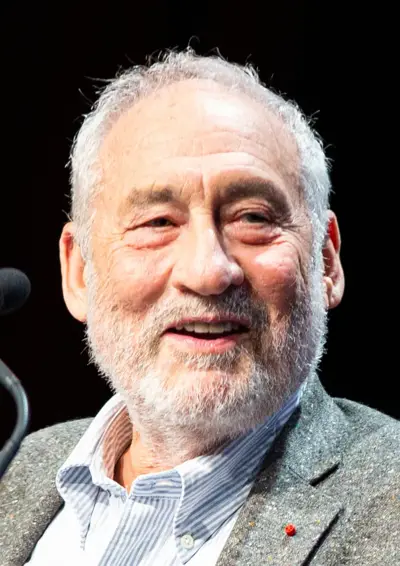
Joseph Eugene Stiglitz is an American economist, public policy analyst, and a professor at Columbia University. He is a recipient of the Nobel Memorial Prize in Economic Sciences (2001) and the John Bates Clark Medal (1979). He is a former senior vice president and chief economist of the World Bank and is a former member and chairman of the (US president's) Council of Economic Advisers. He is known for his support of Georgist public finance theory and for his critical view of the management of globalization, of laissez-faire economists (whom he calls "free-market fundamentalists"), and of international institutions such as the International Monetary Fund and the World Bank.
