James Baird Weaver Quotes
It is unquestionably the duty of the industrial classes, by means of the ballot, to speedily take the Government into their own hands, but in doing so to do justice to all.
At the time, this was considered a very radical point of view by the Democrats and Republicans. It was classic populism.
James Baird Weaver, 1833–1912, U. S. Congressman (Greenback Party, IA), Twice Presidential Candidate, Greenback Party and then The People’s Party (Populists), Speech in the House of Representatives, April 4, 1879
Sourced by: Eigen's Political and Historical Quotations


One of his biggest opponents in this effort was Chancellor Otto von Bismarck-Schoenhausen, 1815-1898.


He was stating the major objections that were given by many of the royalty and the upper class who opposed universal suffrage. Milton however supported the right of all men to vote. See {632509}. Even in the 21st century, there are right wingers who oppose universal suffrage on the grounds that the lower classes vote only concerned by what they materially will obtain, as if many people of all classes do not do that and that all poor do. For additional reasons see {632533}.

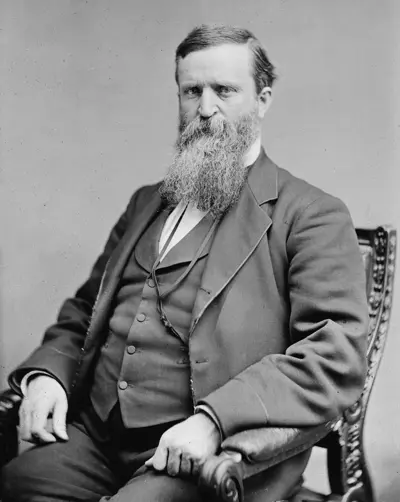
James Baird Weaver was a member of the United States House of Representatives and two-time candidate for President of the United States. Born in Ohio, he moved to Iowa as a boy when his family claimed a homestead on the frontier. He became politically active as a young man and was an advocate for farmers and laborers. He joined and quit several political parties in the furtherance of the progressive causes in which he believed. After serving in the Union Army in the American Civil War, Weaver returned to Iowa and worked for the election of Republican candidates. After several unsuccessful attempts at Republican nominations to various offices, and growing dissatisfied with the conservative wing of the party, in 1877 Weaver switched to the Greenback Party, which supported increasing the money supply and regulating big business. As a Greenbacker with Democratic support, Weaver won election to the House in 1878.
