Thomas Nagel Quotes
It is prima facie highly implausible that life as we know it is the result of a sequence of physical accidents together with the mechanism of natural selection.
Nagel, Thomas. Mind and Cosmos: Why the Materialist Neo-Darwinian Conception of Nature Is Almost Certainly False. Oxford University Press, 2012, p. 6.


At the time, it was very difficult for people who had been taught all their lives that God was directly responsible for the creation to accept the notion of evolution. At the time, there was not the overwhelming evidence proving Darwin’s theory that we have today. Nor did theologians realize that evolution and Darwinism were not inconsistent with the concept of a creator and supreme being. Nonetheless, there are still those who, like Agassiz, reject evolution and insist that the Biblical version of creation is literally true. See {586990}. Then there are people who have come up with the concept of Intelligent Design which originated with Agassiz though he never called it that. Most religious people today, in contrast, see no conflict in natural selection as described by Darwin and later proven, and the concept of God. They see the Biblical creation as metaphorical and natural selection as the product of an omniscient supreme being.

The school board had been pressured by religious fundamentalists throughout the state of Georgia to affix these stickers to all textbooks as there were no textbooks that met curricular standards that did not teach evolution. As soon as they started this practice, a suit was filed in the Federal District Court which found the practice violated both the Federal and Georgia State Constitutions ({586989}). The only reason that the stickers had been used was to try and placate those religious fundamentalists of the community who were opposed to the teaching of evolution. See {586968} for a quote from the legal opinion.

This is a very important quotation. It is usually quoted by opponents of evolution, but almost always, the last sentence is omitted. Evolution nay sayers often claim that the wing of a bird or the human eye could not have evolved in gradual steps, but almost all scientists do not agree, In addition, science has learned, since Darwin’s era, that gradualism, while generally the rule in evolution, is not always required in that mutations can create relatively rapid evolutionary change. So can behavioral factors like the dog evolving from the wolf which occurred in just a few generations. However, if there were found an organism that was created in seconds, doubt would be cast on parts of the evolution concepts. However, no one has established that. The best opponents of science have done to maintain their position is to offer complex animals and organisms they believe are too complex to have been created gradually, but they have not been able to scientifically demonstrate that there is a single one.
While many people in America say they do not “believe in” evolution almost all of them do not know what evolution is much less understand what it is that they think is false. There are very few people who have studied evolution who reject it as being without merit in explaining life forms and their history. Almost all who are against it are religious fundamentalists who take the Judeo-Christian Bible literally. For their particular religion, evolution is a false doctrine, but there are many major religions in America for whom evolution is no problem. For example, Quakers, Unitarians, Congregationalists, Episcopalians, Lutherans, Reform Jews, Roman Catholics, Eastern Orthodox just to list some. Creationism, of which the quote author is an advocate, is an excellent religious solution to the contradiction between Evolution and the literal word of the Bible, but it is such terrible science, that it is not even considered science or taught in science curricula.

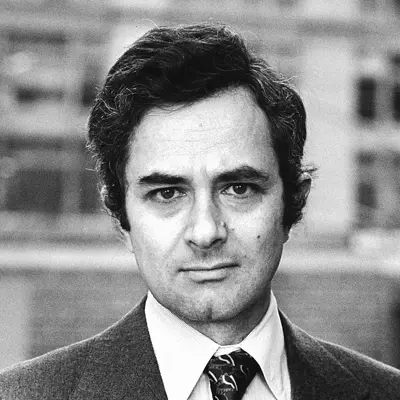
Thomas Nagel is an American philosopher. He is a University Professor of Philosophy and Law, Emeritus, at New York University, where he taught from 1980 to 2016. His main areas of philosophical interest are legal philosophy, political philosophy, and ethics.
