H. G. Wells Quotes
It is highly probable that the bulk of the Jew's ancestors 'never' lived in Palestine 'at all,' which witnesses the power of historical assertion over fact.
Wells, H. G. The Outline of History: Being a Plain History of Life and Mankind, vol. 1, Macmillan, 1920, p. 493.


Olmert was speaking for a significant minority of Israelis who believe that God consecrated the land of Palestine to the Jewish People and all other peoples who controlled it did so by conquest. So their logic is for those who do not believe in the Bible and give no modern credence to God’s will, the Jews have no taken back the land by conquest which is the way the Palestinians and all of the many peoples had controlled that land. For believers, the Jews have the highest right; for non-believers, their right of conquest is no weaker than any of the others.


The advocacy of the Jewish Return to the Holy Land was not first suggested or stated by European Jewish Zionists. Brightman was not only the first Christian to urge the return of the Jews, but the secon person of any faith to suggest it. He was only preceded by a Jewish refugee from the Spanish Inquisition--Joseph Nasi in 1561.


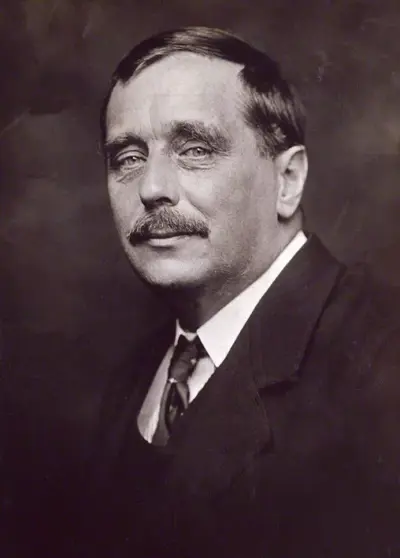
Herbert George Wells —known as H. G. Wells—was a prolific English writer in many genres, including the novel, history, politics, social commentary, and textbooks and rules for war games. Wells is now best remembered for his science fiction novels and is called a "father of science fiction", along with Jules Verne and Hugo Gernsback.[a] His most notable science fiction works include The Time Machine (1895), The Island of Doctor Moreau (1896), The Invisible Man (1897), and The War of the Worlds (1898). He was nominated for the Nobel Prize in Literature four times.
